At stake in the debate is not only the interpretation of recent talks, but also the broader question of whether the present crisis can be addressed through administrative assurances alone.
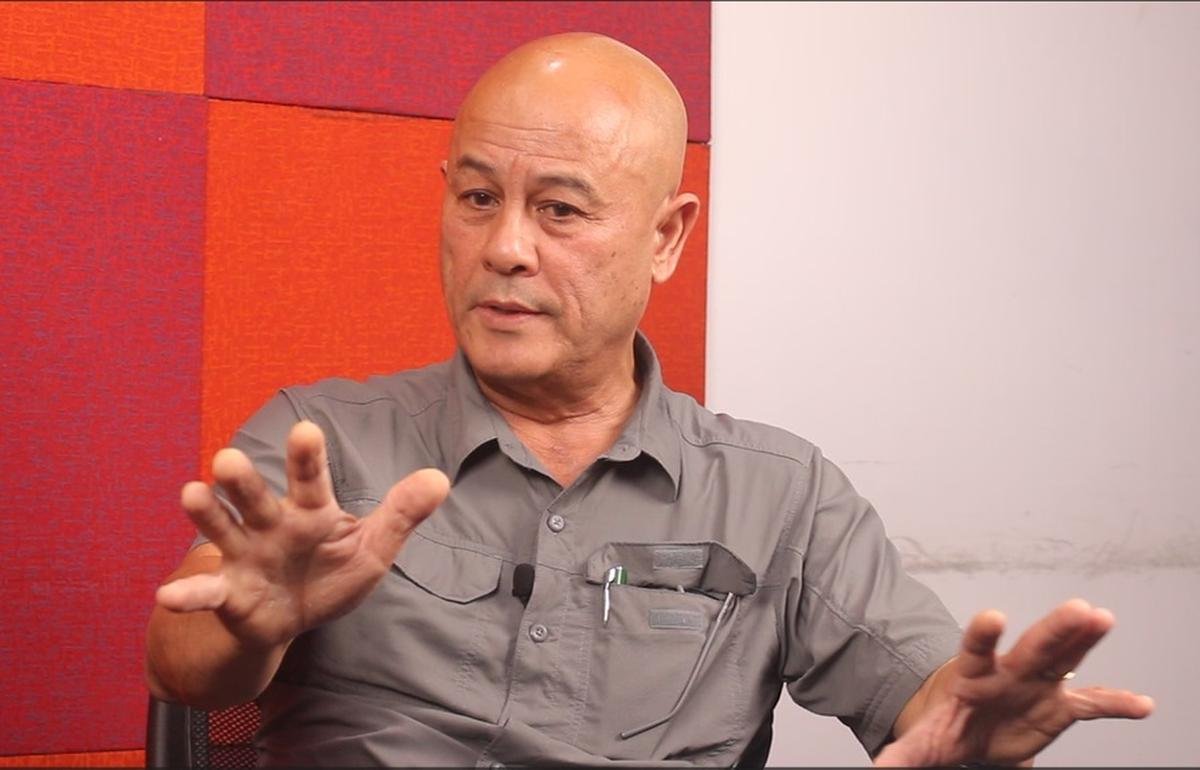
By Seilen Haokip
March 23, 2026: The maiden talks between the Kuki-Zo Council and Manipur Chief Minister Yumnam Khemchand Singh have given detractors an opportunity to place the KZC in the dock and question its commitment to the Kuki-Zo community’s long-standing pledge to accept nothing less—and nothing more—than a Union Territory with a legislature.
Much of the criticism has centred on two remarks made by the Chief Minister a day after the Guwahati meeting. First, he said there are no buffer zones in the state. Second, he suggested that the Kuki-Zo political demand is unrealistic, claiming that the Centre has already made it clear that Manipur’s territorial integrity is non-negotiable—a notion that is both unconstitutional and seditious. The only non-negotiable territorial integrity is that of the Union of India, not of a state.
It must be stated clearly that the state government has no authority to decide on the creation of a Union Territory. It may continue to insist that Manipur’s territorial integrity is sacrosanct, but the fact remains that Kuki-Zo groups under the Suspension of Operations agreement with the Centre are engaged in talks with the Ministry of Home Affairs, the constitutional authority on the issue. The political demand for a Union Territory lies at the heart of those discussions; a decision on the subject is in process, though yet to be concluded.
READ: Manipur’s Phantom Buffer Zone: CM’s Denial Is as Real as the Barbed Wire on the Ground
READ: No Talks, No Retreat: Iran Pushes Back on Trump’s Negotiation Claim
Likewise, the Chief Minister may, for reasons of political convenience and to satisfy his own constituency, claim that there are no buffer zones in Manipur. But the situation on the ground tells a very different story. Kuki-Zo lives are at stake, and their security was not ensured by the state government; rather, the state was the perpetrator.
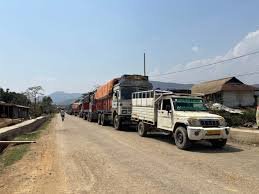
Even if the state does not formally recognise the term “buffer zone,” security forces have necessarily maintained de facto separation lines between areas dominated by different ethnic communities, particularly along the valley-hill interface. These may not exist as official administrative zones, but in practice they function as security deployment areas meant to prevent direct confrontation and save the lives of members of both communities. Media reports often refer to them as buffer zones because that is, in effect, what they are.
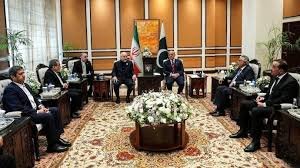
Returning to the talks themselves, any peace-loving person would agree that this was a positive initiative. The Chief Minister framed the meeting as part of an effort to restore peace in the state, though his language also reflected a status quo position rooted in the insistence that Manipur’s territorial integrity must remain untouched—a condition no longer acceptable to the Kuki-Zo. His emphasis on the suffering of internally displaced persons, who are still unable to return to their native homes, was significant and deserves acknowledgement. However, this is a situation that cannot be addressed until a political settlement is reached.
Similarly, the Kuki-Zo Council entered the talks with constructive intent and put forward three fundamental concerns: first, the de-escalation of ongoing tensions between Kuki and Tangkhul tribal communities in Ukhrul district; second, the maintenance of the sanctity of the so-called buffer zones or security checkpoints; and third, the expediting of a resolution to the ongoing tripartite talks involving the Government of India, the state government, and the groups under Suspension of Operations.
At best, such engagement initiated by the Chief Minister may gradually help rebuild some degree of trust and improve relations between communities, even if neither side alters its core political position. The status quo camp remains bound to its deeply embedded view that the territorial integrity of Manipur is inviolable. The Kuki-Zo position, meanwhile, remains firm for two vital and undeniable reasons:
a) The first is the question of historical and legal ownership of land, particularly the Kuki Hills, which, it is argued, existed separately from Meckley’s Manipur or present-day Kangleipak/Manipur. From this historical standpoint, the hills were never organically part of Manipur, but were drawn into the present arrangement through colonial conquest after 1891, the Battle of Khongjom, and later the Kuki Rising of 1917–1919, also known as the Anglo-Kuki War.
b) The second is the unprecedented violence that began on 3 May 2023—namely, state-sponsored ethnic cleansing, an event without parallel in independent India.
In that context, the Chief Minister’s appeal is revealing. His call to “restore peace” and proceed in the spirit of “forgive and forget” may sound conciliatory, but it is also preconceived and politically framed by his repeated assertion that the Prime Minister has already made it clear that Manipur’s territorial integrity will remain intact. His remark—that if India’s Prime Minister has said so, what more can he say—suggests that he will not depart from that line, whether or not he personally wishes to respond differently to the Kuki-Zo position.
What is needed now is integrity and intellectual honesty: a refusal to deny reality, a willingness to acknowledge the nature of the ongoing engagements rather than prolong the agony—especially that of the IDPs—and a commitment to shape those engagements accordingly. Only such an approach can create the conditions for a genuinely relevant political solution and, with it, the possibility of lasting peace, stability, and development in the region.
(The author is Spokesperson, Kuki National Organisation)