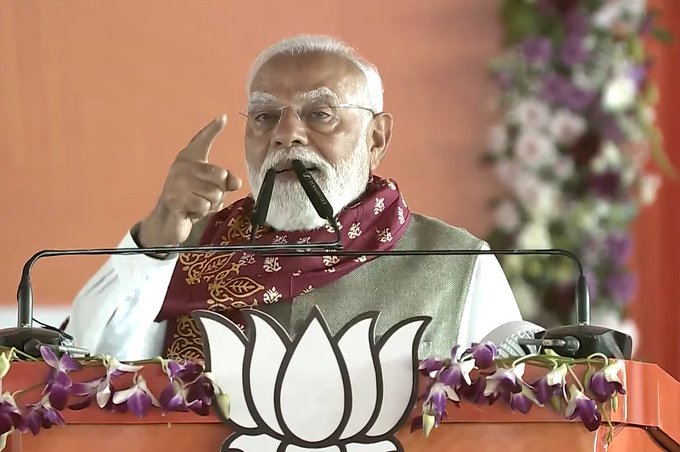
Choosing the abandoned Tata Nano factory site, Modi invoked the legacy of Singur to highlight what the BJP calls lost industrial opportunities under the TMC, urging voters to embrace a new development-focused direction.
BY PC Bureau
January 18, 2026: Prime Minister Narendra Modi on Sunday launched a blistering attack on the Trinamool Congress (TMC) government at a high-voltage rally in Singur, declaring that West Bengal is ready to bid farewell to what he described as the party’s “maha jungle raj” (mega lawlessness) as the state heads toward crucial Assembly elections later this year.
Drawing parallels with the BJP-led NDA’s claim of ending “jungle raj” in Bihar, Modi directly challenged Chief Minister Mamata Banerjee’s governance, asserting that public anger against the ruling dispensation has reached a tipping point.
Addressing a massive gathering at the abandoned site of the erstwhile Tata Nano factory—an area steeped in political symbolism following the 2008 land acquisition protests that forced Tata Motors to shift the project out of Bengal—Modi urged voters to embrace change.
“Paltano dorkar (change is necessary),” he said, calling on people to pledge for a new political direction in the state.
The rally formed part of Modi’s two-day visit to West Bengal, which included stops in Malda and Kolkata, and coincided with the inauguration of infrastructure projects worth ₹830 crore aimed at improving regional connectivity and development.
Political observers view the choice of Singur as a calculated move by the BJP to underline what it calls the TMC’s failures in industrial growth and governance, reviving memories of the Nano project’s collapse—often cited as a symbol of missed economic opportunities in the state.
READ: Negligence Kills: Unmarked Drain Claims Techie’s Life in Noida
In his address, Modi highlighted the BJP-led Centre’s efforts to honour Bengal’s cultural and historical legacy, contrasting them with what he alleged was TMC’s neglect.
“It was a BJP government that installed Netaji Subhas Chandra Bose’s statue at India Gate. For the first time, the Azad Hind Fauj was honoured at the Red Fort. An island in Andaman and Nicobar was named after Netaji,” he said. He also cited the recognition of Bengali as a classical language and Durga Puja’s UNESCO World Heritage status under his tenure.
পাল্টানো দরকার – চাই বিজেপি সরকার!#PaltanoDorkarChaiBJPSorkar pic.twitter.com/vTB8vZhbXq
— BJP (@BJP4India) January 18, 2026
Taking a swipe at the TMC’s past alliance with the Congress-led UPA, Modi asked why these milestones were not achieved earlier. “They were partners in Sonia Gandhi’s government. Why didn’t they do this then? It is Modi who truly loves Bengal,” he said, reinforcing the BJP’s pitch as the custodian of Bengali pride and development.
Modi’s visit comes amid escalating political tensions in West Bengal, with the BJP seeking to build on its performance in the 2021 Assembly elections, where it won 77 seats. The party is banking on allegations of corruption, governance lapses, and anti-incumbency sentiments to challenge Banerjee’s hold on power.
TMC leaders dismissed Modi’s remarks as routine election rhetoric, accusing the BJP of misleading voters and failing to fulfil central commitments to the state, while defending Banerjee’s record on social welfare and grassroots development.
With heightened security and a charged atmosphere at the rally, political analysts say Modi’s Singur speech signals an aggressive BJP campaign strategy—one that blends historical grievances, cultural symbolism, and governance claims as West Bengal moves toward a fiercely contested 2026 electoral battle.