The latest incident adds to weeks of sporadic clashes, arson, and displacement in mixed Kuki–Tangkhul settlements along National Highway 202.
BY PC Bureau
March 28, 2026: Kuki civilians came under fresh firing on Friday night, as tensions between Kukis and Tangkhul Nagas in Manipur’s Ukhrul district flared once again, raising fears of a wider escalation along the volatile Litan–Sareikhong belt.
According to a statement issued by the Kuki CSO Working Committee in Ukhrul, around 15 rounds of automatic gunfire were reported at approximately 10:10 PM on March 27 from the direction of New Heaven towards Chepu Yaolen. The group alleged that the firing was carried out by “Tangkhul militants” and described it as part of a pattern of provocation targeting Kuki-inhabited fringe areas.
The statement added that Kuki villagers chose not to retaliate, a move it said helped prevent an immediate escalation into a larger armed confrontation. However, it warned that patience within the community is “wearing thin” amid repeated incidents.
READ: Nepal Cracks Down on Ex-PM KP Sharma Oli Over Gen Z Protests
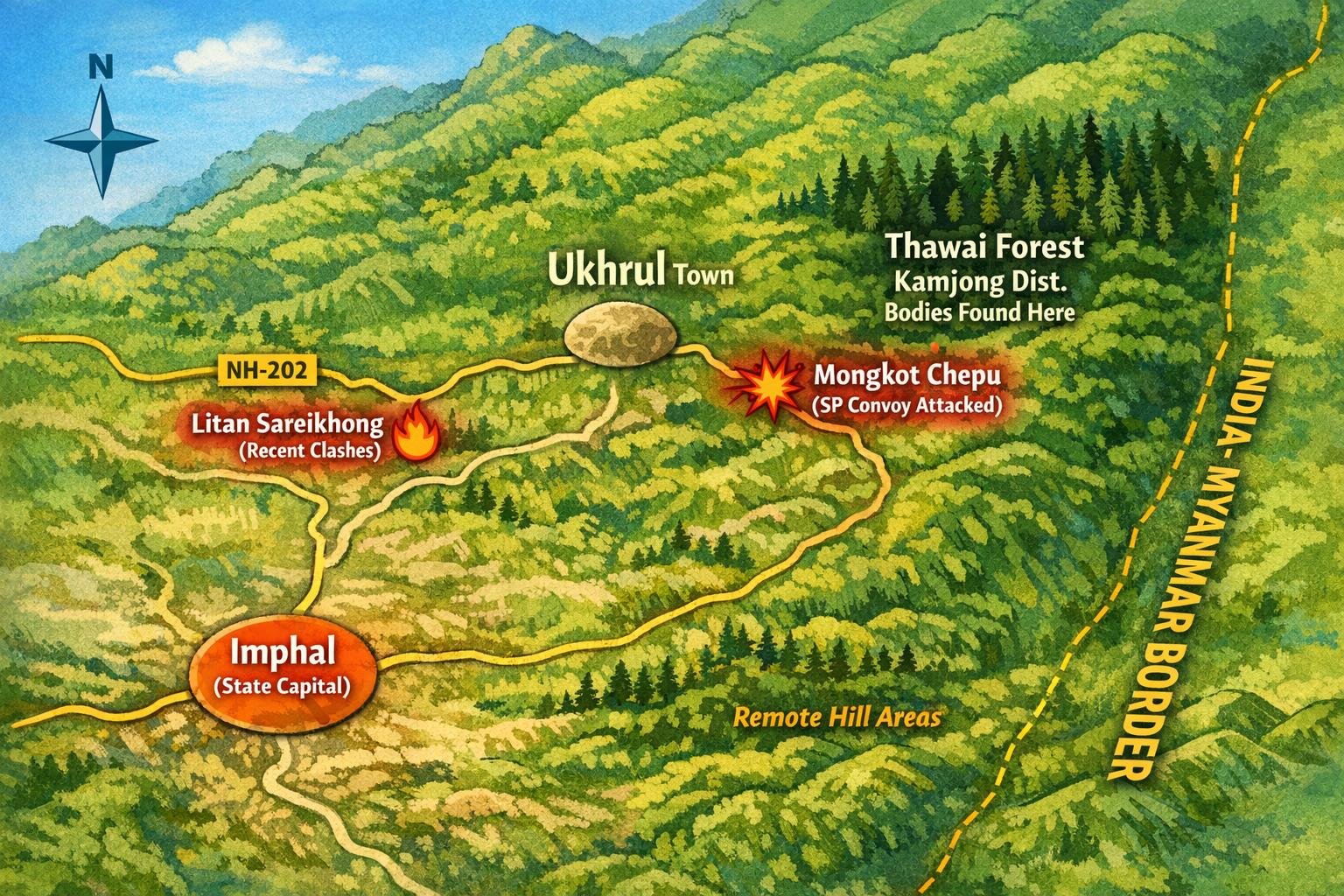
The Litan–Sareikhong stretch along National Highway 202 has emerged as a flashpoint in recent weeks, with multiple reports of sporadic gunfire, arson, and civilian displacement. Mixed settlements in the area—home to both Kuki-Zo and Tangkhul Naga populations—have become particularly vulnerable.
The latest incident follows a wave of violence that began in early February, when a local altercation reportedly escalated into ethnic clashes. Over several days, dozens of homes were torched, gunshots were reported, and both communities accused each other of orchestrating attacks. The unrest forced authorities to impose prohibitory orders, suspend internet services, and deploy security forces, including the Army and Assam Rifles, to restore order.
Despite these measures, the situation has remained fragile. Throughout March, there have been intermittent reports of exchanges of fire in areas such as Mongkot Chepu, Mullam, and near Sharkaphung. Both Kuki and Tangkhul groups have reported injuries among civilians and alleged targeted attacks on villages and farmers.
Each side continues to trade accusations. Kuki organizations claim that Tangkhul village volunteers and armed groups are carrying out unprovoked attacks to intimidate Kuki settlements. Tangkhul bodies, on the other hand, have accused Kuki militants—some allegedly operating under Suspension of Operations agreements—of coordinated assaults on Naga villages.
Civil society responses have intensified alongside the violence. Kuki groups have called for shutdowns along key highways, demanded independent investigations, and sought relocation of vulnerable villages to safer areas. Tangkhul organizations have condemned attacks on their communities and urged stronger protection measures.
The current unrest is rooted in a long history of ethnic tensions between Kuki and Naga groups in Manipur’s hill districts. The conflict, which saw its most violent phase in the 1990s, left over a thousand people dead and displaced tens of thousands. Competing claims over land, identity, and political autonomy continue to fuel mistrust.
Recent instability across Manipur since 2023 has further strained relations, with increased militarization and the presence of armed groups complicating efforts at peace. In Ukhrul—traditionally a Tangkhul stronghold—minority Kuki settlements in border areas remain particularly exposed.
Authorities have carried out patrols and limited operations in the region, but both communities have criticised the state and central governments for failing to prevent recurring violence.
As of now, the situation in Litan–Sareikhong and adjoining areas remains tense. With repeated allegations of provocation and a growing sense of insecurity among civilians, the risk of further escalation continues to loom large.