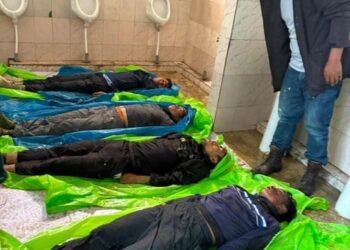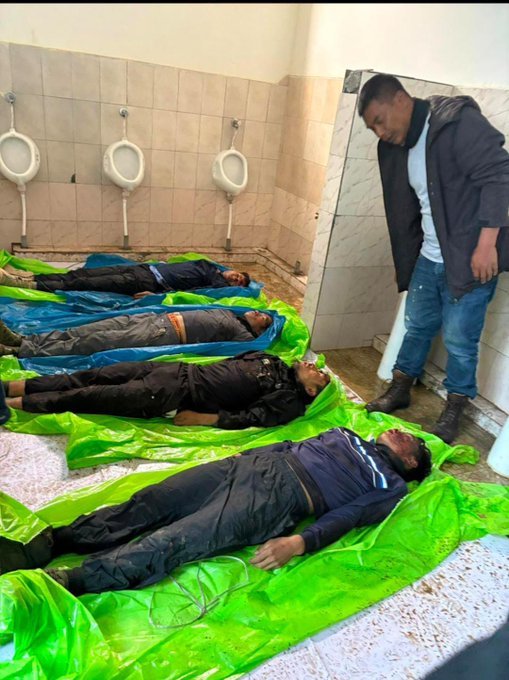
The deadly encounter highlights the deep-seated rivalries within the Naga insurgency. The Eastern Flank, a Myanmar-based breakaway group, and the NSCN-IM have clashed repeatedly over territory, influence, and revenue collection, with violent confrontations continuing despite ongoing peace talks.
By PC Bureau
March 29, 2026: In a late-night ambush that underscores persistent and often violent fissures within Naga insurgent groups, four cadres of the NSCN’s Eastern Flank were killed in Manipur’s Kamjong district on Saturday evening. The Eastern Flank, a Myanmar-based breakaway formation reportedly led by retired Lt Gen HS Ramsan (also known as Hangshi or Hanshi Ramsan), is believed to have been targeted by suspected members of the rival NSCN-IM faction. Sources indicate the clash may have been triggered by a dispute over the distribution of extortion proceeds.
The attack occurred around 9:20 p.m. on March 28 near Hongbei village under Kasom Khullen block, along the Imphal–Kasom Khullen road. According to local reports, six militants were travelling in a vehicle when they were ambushed shortly after entering the village. Four were killed on the spot, while two others managed to escape. Police from Kasom Khullen conducted a spot inquiry on Sunday morning. No arrests have been made so far, and the exact motive remains under investigation.
CROSS-BORDER MOVEMENT BY NSCN EASTERN FLANK based in Burma.
NSCN Eastern Flank through their PR admitted to crossing into Ukhrul dist Manipur India. It begs the question-how could a Burmese terrorist group cross over and engage in firefight with NSCN IM terrorists in India? pic.twitter.com/r5SfZ9emxJ
— TPKZ (@KukiZo1437) March 29, 2026
Victims Identified
Local media have identified the deceased as:
- Captain/Major Sochipem Phungshok (Marao village)
- Sergeant/Sergeant Major Zairei Vasah (Halang village)
- Corporal Bahnlei Ahlahpya (Kaishan Boklum, Eastern Nagaland)
- Corporal/Sergeant Thansomi Vashi (Mapao village)
(Designations vary across reports due to field-level inconsistencies.)
The NSCN Eastern Flank operates primarily from bases in Myanmar’s Sagaing region and is considered a dissident formation functioning parallel to the NSCN-IM. Its leadership, including Ramsan—a veteran of the Naga movement since 1974 who was later expelled from the NSCN-IM—has consistently emphasized the “Naga national principle,” including demands for a separate flag and constitution.
READ: Iran Threatens Strikes on US-Linked Campuses in Middle East
Background: A Fractured Insurgency
The National Socialist Council of Nagalim (NSCN), formed in 1980, has splintered into multiple factions over the decades. The dominant NSCN-IM, led by Thuingaleng Muivah, signed a Framework Agreement with the Government of India in 2015 and remains under a ceasefire arrangement. However, rivalries over territory, influence, and taxation networks—often described as extortion by authorities—continue to fuel periodic violence.
The Eastern Flank, positioned as a Myanmar-based command structure, has been involved in past clashes not only with Indian security forces but also with other Naga factions. Both the NSCN-IM and Eastern Flank continue to assert core demands, including a separate Naga constitution, a distinct flag, and the vision of a unified “Nagalim” encompassing Naga-inhabited areas across India and Myanmar.
Local Reactions and Security Concerns
Local media and observers have described the incident as part of an ongoing pattern of intra-Naga rivalry, with some suggesting the possibility of mistaken identity or an internal feud. Analysts note that disputes over extortion revenue remain a frequent trigger for such confrontations in the region, where militant groups levy “taxes” on businesses, contractors, and development projects.
The killings have also renewed attention on cross-border militant movement between Myanmar and India, particularly in the remote tri-junction areas of Manipur. Security agencies are expected to step up patrols in Kamjong and neighbouring Ukhrul district, both of which have witnessed repeated factional tensions in recent years.
The ambush comes amid a stalled Naga peace process. While negotiations between the Centre and the NSCN-IM continue, the presence of breakaway factions like the Eastern Flank—along with their alleged involvement in cross-border networks and illicit economies—has complicated efforts toward a comprehensive settlement.
Security analysts warn that continued intra-group violence risks destabilizing the fragile security environment in Manipur, which has already been strained by ethnic tensions since 2023. There are concerns that such incidents could draw in other armed groups operating in the region, further escalating instability.
As investigations continue, authorities are completing identification and post-mortem procedures before handing over the bodies to the families. For now, the ambush serves as a stark reminder that, despite decades of negotiations and ceasefires, the Naga hills remain volatile—where ideological aspirations often collide with entrenched rivalries over territory and resources.