Analysts say even limited disruption in Hormuz by Trump regime could trigger a cascading rise in global oil prices, contradicting Trump’s goal of lowering energy costs.
BY PC Bureau
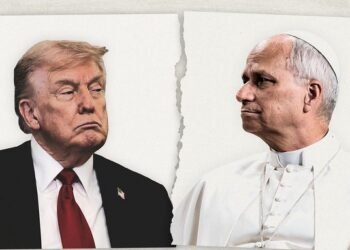
April 13, 2026: U.S. President Donald Trump’s reported push to blockade the Strait of Hormuz has raised a fundamental question: why would a leader who has repeatedly promised to lower fuel costs risk triggering a global oil price shock?
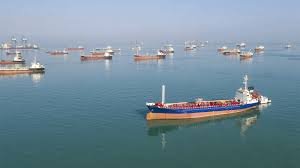
At the heart of the move is pressure on Iran. The Strait of Hormuz is one of the world’s most critical energy chokepoints, through which roughly a fifth of global oil supply passes. By threatening or enforcing a blockade, the U.S. would effectively squeeze Iran’s oil exports and disrupt its economic lifeline.
For Trump, this aligns with a broader strategy of “maximum pressure”—forcing Tehran back to negotiations over its nuclear programme and regional activities. In this context, the blockade is less about oil markets and more about geopolitical leverage.
>Trump: We are mobilizing our ships and we have a huge fleet that we are moving to the Strait of Hormuz. The blockade will be similar to what we did to Venezuela but at a higher level. I want everything … They have no cards.
>Fars: Trump joined Team Iran. The US president, by… https://t.co/6lE8o4NuPB— barry with the NED (@bonzerbarry) April 12, 2026
The U.S. military’s United States Central Command (CENTCOM) has indicated it will begin enforcing the blockade, targeting vessels entering or leaving Iranian ports across the Arabian Gulf and Gulf of Oman. Officials say the measures will apply broadly to ships of all nations using Iranian facilities, though they insist freedom of navigation through the Strait for non-Iran-linked traffic will not be disrupted.
Escalation after failed talks
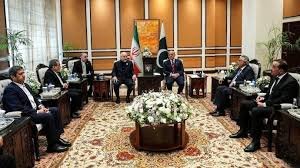
The move follows the breakdown of U.S.-Iran negotiations in Pakistan, after which Trump announced a sweeping naval crackdown. The planned enforcement marks a significant escalation in an already volatile standoff, with the risk of military confrontation and economic fallout rising sharply.
Iran hits back on oil prices
Enjoy the current pump figures. With the so-called ‘blockade’, Soon you’ll be nostalgic for $4–$5 gas.
ΔO_BSOH>0 ⇒ f(f(O))>f(O) pic.twitter.com/rVxlC6vFWG
— محمدباقر قالیباف | MB Ghalibaf (@mb_ghalibaf) April 12, 2026
Iran has responded with both warnings and ridicule. Mohammad Bagher Ghalibaf mocked Trump’s strategy by highlighting its potential economic blowback on American consumers.
In a post on X, Ghalibaf warned that current U.S. fuel prices could soon look cheap if tensions escalate, telling Americans to “enjoy the current pump figures” and suggesting they may grow “nostalgic” for $4–$5 per gallon petrol.
He also shared a cryptic, engineering-style equation—interpreted as a reference to a blockade of the Strait of Hormuz—implying that even a small disruption could trigger cascading effects in oil markets. The message was clear: any attempt to choke Iran’s maritime access could amplify price shocks far beyond initial expectations.
The oil price contradiction
This is where Trump’s strategy appears to clash with his economic agenda.
A disruption in the Strait of Hormuz—whether full or partial—would almost certainly push global oil prices higher. Major economies, including India and China, rely heavily on this route. Even the threat of disruption tends to send markets into panic, driving up crude prices and, eventually, fuel costs.
That runs counter to Trump’s long-standing promise to bring down energy prices and ease inflationary pressures at home.
How Washington may manage the fallout
To balance this contradiction, the administration could rely on several measures:
- Increasing domestic oil production in the U.S.
- Coordinating with producers like Saudi Arabia to boost supply
- Releasing crude from strategic reserves to stabilise prices
- Framing any price spike as temporary and necessary for long-term security gains
A high-risk gamble
Ultimately, the blockade strategy reflects a calculated gamble—prioritising geopolitical leverage over short-term economic stability. While it may increase pressure on Iran, it also risks triggering exactly what critics—and Tehran—are warning about: a surge in global oil prices that could hit American consumers and the world economy alike.
Whether the move strengthens Washington’s negotiating position or backfires through economic shock will depend on how long tensions persist—and how markets react to this latest escalation.