Missile strikes hit key areas of Tehran, including districts near Supreme Leader Ali Khamenei’s residence, forcing his relocation as the US openly entered the military confrontation alongside Israel.
BY PC Bureau
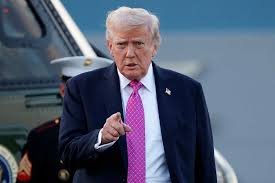
February 28, 2026: US President Donald Trump issued an unprecedented direct warning to Iranian troops on Saturday, telling them to “drop arms or face death” as American forces joined Israel in coordinated strikes on targets in Tehran, dramatically escalating one of the most dangerous confrontations in decades between Washington and Tehran.
Multiple explosions rocked the Iranian capital early Saturday morning, sending plumes of smoke rising above key government districts. Iranian state media reported that several missiles struck sites in central Tehran, including areas near the residence and offices of Supreme Leader Ali Khamenei. Iranian officials later confirmed that Khamenei had been relocated to a secure, undisclosed location before or shortly after the strikes.
Israeli officials described the operation as a pre-emptive move aimed at neutralizing what they called imminent threats linked to Iran’s nuclear and military infrastructure. The strikes mark a sharp shift from covert sabotage and proxy confrontations to direct, overt military action involving both Israeli and American forces.
Speaking from the White House, Trump confirmed US participation in what he called “major combat operations in Iran,” framing the attacks as necessary to protect American lives and interests.
READ: Khamenei Shifted After US, Israel Bomb Tehran Residence
READ: US Joins Israeli Strikes on Iran as Explosions Rock Tehran
“Our objective is to defend the American people by eliminating imminent threats from the Iranian regime,” Trump said in a nationally televised address.
He delivered an unusually blunt warning aimed directly at Iranian military personnel:
“Lay down your weapons, or face certain death.”
Trump also doubled down on his administration’s hardline stance on Iran’s nuclear program, reiterating that Tehran would never be allowed to acquire nuclear weapons under any circumstances.
“Iran can never have a nuclear weapon. Not ever. No enrichment. No stockpiling. Permanent verification,” he said.
In immediate response to the strikes, Iran shut down its airspace and imposed widespread internet restrictions, severely disrupting communications across the country. The blackout fueled fears of further military escalation and internal unrest.
BREAKING:
Trump addresses Iran, telling members of the Islamic Revolutionary Guard, the armed forces, and police to lay down their weapons with full immunity or face inevitable death. pic.twitter.com/g9JiYzEBVQ
— WAR (@warsurv) February 28, 2026
The strikes come at a particularly volatile moment, with nuclear negotiations between US and Iranian representatives already under strain. Talks mediated by Oman had been scheduled to continue in Vienna next week, but the military escalation has cast serious doubt on the diplomatic process.
Israeli authorities said they had prepared for retaliation, activating nationwide emergency protocols, shutting airspace, and ordering civilians into protected zones. Meanwhile, the United States has reinforced its military presence across the region, deploying additional fighter aircraft and naval assets.
Iran has condemned the attacks as an act of aggression and vowed retaliation, though no immediate counterstrikes were reported at the time of writing. Security analysts warn that the direct involvement of US forces significantly raises the risk of a prolonged regional conflict, potentially drawing in Iranian-aligned militias across West Asia.
The United Nations and multiple global powers have urged restraint, warning that further escalation could destabilize an already volatile region.
The strikes mark a decisive turning point in US-Iran tensions, shifting the conflict from shadow warfare and diplomatic brinkmanship into open military confrontation — with consequences that could reshape the strategic balance of the Middle East.