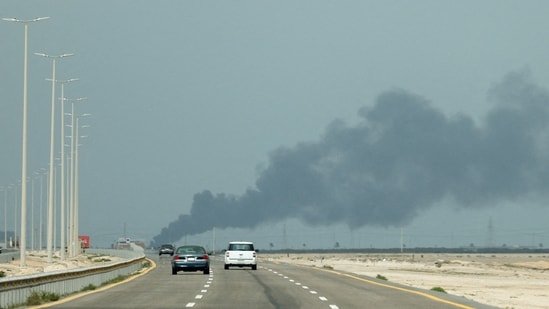
The strike at US Embassy in Riyad is widely attributed to Iranian forces or allied groups following the reported death of Ali Khamenei in joint US-Israeli operations. Tehran has vowed severe retaliation as regional hostilities intensify.
BY PC Bureau
March 3: In an escalation in the ongoing U.S.–Israel conflict with Iran on March 3, 2026, a drone strike targeted the U.S. Embassy in Riyadh, Saudi Arabia, igniting a small fire and causing limited structural damage.
According to a spokesman for the Saudi Ministry of Defense, air defense systems intercepted four incoming projectiles believed to be drones aimed at Riyadh’s diplomatic quarter. Despite those interceptions, two drones struck the embassy compound, sparking a blaze. No injuries were reported, as the facility was largely unoccupied during the overnight hours.
The attack is widely attributed to Iranian forces or affiliated groups, amid Tehran’s retaliation following the reported killing of Supreme Leader Ali Khamenei in joint U.S.–Israeli strikes that began on February 28. Iranian officials have pledged severe reprisals, as the country faces internal uncertainty and an expanding regional confrontation.
The United States Department of State issued a “shelter in place” advisory for American citizens in Riyadh, Jeddah, and Dhahran, urging them to avoid the embassy area. Travel advisories were also raised, with Americans encouraged to consider departing parts of the Middle East due to heightened security threats:
READ: Iran Declares Strait of Hormuz Closed, Will Strike at Ships
Donald Trump addressed the strike, saying the U.S. response would become clear soon. He previously indicated that military operations against Iran could extend for weeks, with objectives including curbing Tehran’s nuclear and missile capabilities and protecting U.S. interests and allies.
The Riyadh incident comes amid a widening conflict. Iran has launched missiles toward Israel and several Gulf states hosting U.S. forces, while Hezbollah has intensified cross-border attacks from Lebanon. Israel has responded with extensive airstrikes in Beirut’s southern suburbs and southern Lebanon, mobilizing more than 100,000 reservists in preparation for sustained combat.
From the drone strike on the US embassy in Saudi.pic.twitter.com/9UgnnJjJ2J
— Jackson Hinkle 🇺🇸 (@jacksonhinklle) March 3, 2026
Energy infrastructure has also been affected. A drone strike targeted Saudi Arabia’s Ras Tanura refinery, briefly disrupting operations at one of the kingdom’s key oil facilities. Ongoing threats around the Strait of Hormuz have added to volatility in global energy markets.
Inside Iran, casualties continue to rise. The Iranian Red Crescent reported at least 555 deaths across more than 130 cities since the start of hostilities. Senior official Ali Larijani stated that Tehran would not negotiate with Washington, even as U.S. officials have left open the possibility of talks.
Nuclear safety concerns persist. Rafael Grossi, head of the International Atomic Energy Agency, said there is no confirmed damage to Iranian nuclear facilities so far but warned that ongoing strikes near active sites increase the risk of a radiological incident.
With airspace closures, heightened security alerts, and evacuations underway across the region, the embassy strike underscores the expanding scope of the conflict and raises fears of further instability across the Middle East and beyond.