As corporates line up to pay astronomical sums for access to Lionel Messi, state sports associations and athletes at the grassroots continue to survive on meagre grants, exposing deep structural imbalances.
By Navin Upadhyay
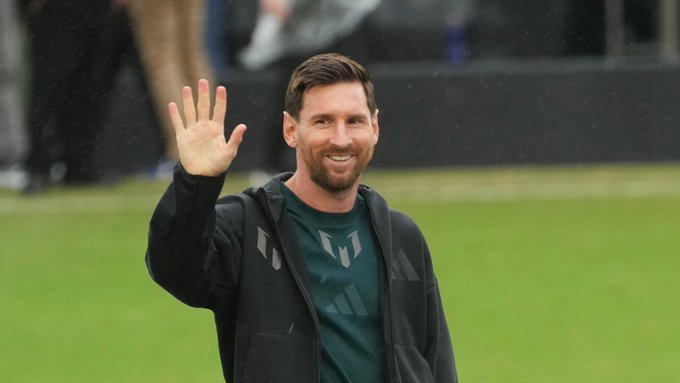
Lionel Messi’s whirlwind visit to Delhi on December 15, 2025, epitomises the global allure of football’s biggest star. The city rolled out the red carpet—high-security cover, presidential suites at The Leela Palace reportedly costing up to ₹7 lakh per night, and tightly curated events that blended sport, politics, and celebrity. Yet the most arresting detail is the reported ₹1 crore price tag some corporates are paying for a brief “meet-and-greet” handshake with the Argentine captain. That figure lays bare a profound irony at the heart of India’s sporting ecosystem.
While crores are splurged on fleeting proximity to global icons, thousands of Indian athletes—especially those outside cricket—grapple with chronic underfunding, job insecurity, and vanishing sponsorships. Messi’s visit merely magnifies a long-standing imbalance in a country overwhelmingly obsessed with one sport.
This disparity is not new, but it stands out starkly at a time when India’s sports economy is booming yet deeply skewed. Cricket, dominated by the Board of Control for Cricket in India (BCCI)—among the richest sporting bodies in the world—commands an overwhelming share of resources. Estimates suggest that nearly 87% of India’s sports capital flows into cricket alone.
The result is a vicious cycle: without big money, other sports struggle to attract media attention or corporate backing, reinforcing their marginalisation. Talent, visibility, and funding remain trapped in a self-perpetuating loop.
– The Indian government spent more than 150 crore for Lionel Messi.
– Fans went mad to see him.
– People are buying 10 lakh Rs tickets just for 1 photo with him.
– Indian politicians are hanging around with him.But on the other side, Indian legend Sunil Chhetri was literally… pic.twitter.com/Oxt8KElm9y
— Tejash (@Tejashyyyyy) December 13, 2025
The human cost is evident. Athletes who dedicate their lives to representing India often face existential uncertainty. Many non-cricket sportspersons lack stable employment, forcing them to depend on government jobs or low-paid work merely to survive. Promising athletes frequently compete without sponsorship, juggling training with menial employment, leaving little scope for peak performance.
READ: From Sikkim to Meghalaya, Northeast Steps Up Plastic Curbs
READ: Sydney Shooting: Pak-Origin Father and Son Named as Gunmen
In most cases, state associations representing various sports receive only a pittance in grants. As a result, they cannot afford to hold proper training camps or even book AC train journeys for their athletes travelling to national competitions. Accommodation at many national events is, to put it mildly, pathetic.
Where are these corporate honchos when it comes to supporting these sports? Why can’t even a fraction of the money spent on celebrity handshakes be channelled into state associations that work at the grassroots, often against impossible odds, simply to keep India’s sporting ecosystem alive?
Paralympic athletes—despite frequently outperforming their able-bodied counterparts in medal tallies—remain severely underfunded and under-recognised. Nearly 80% of junior Paralympic talents reportedly lack access to professional coaching. Historical cases abound: archer Limba Ram and swimmer Murlikant Petkar faded into obscurity after receiving little to no institutional support during their careers.
Even elite performers are not insulated from systemic failure. Over 300 high-level athletes, including Olympic medalists, have reportedly been caught in disputes over unpaid dues amounting to ₹8.78 crore—exposing deep administrative inefficiencies.
Corporate sponsorship patterns only worsen the imbalance. While the Indian Premier League (IPL) and BCCI-linked events attract massive investments, other disciplines remain overly dependent on government funding, mired in bureaucratic delays and infrastructure shortages. Boxers, wrestlers, badminton players, and track athletes routinely crowd-fund for international travel, equipment, or physiotherapy.
Cultural attitudes compound the problem. Academic achievement continues to be prioritised over athletic excellence, while ineffective scouting systems fail to nurture grassroots talent. As several studies point out, inadequate funding prevents athletes from competing at global standards—turning serious sport into a pursuit largely accessible only to the affluent.
Against this backdrop, the symbolism of Messi’s Delhi sojourn is striking. While ₹1 crore buys a handshake, that same amount could finance year-long training programmes for multiple athletes. As
This contrast is not merely financial; it is cultural. India opens its wallet for foreign legends but routinely allows its own non-cricket heroes to retire broke, forgotten, or forced to sell medals to survive.
Ultimately, this reflects a deeper malaise. India’s vast sporting potential remains underutilised due to misplaced priorities. Initiatives like Khelo India promise change, but unless funding is democratised and corporate sponsorship diversifies beyond cricket, the monopoly will persist.
Messi’s visit, for all its glamour, serves as a stark reminder: genuine sporting glory lies not in imported spectacle, but in sustained investment in homegrown talent.