The court sharply questioned the integrity of the investigation, finding that documents cited by the prosecution reflected administrative deliberations rather than criminal intent, undermining the foundation of the case.
BY PC Bureau
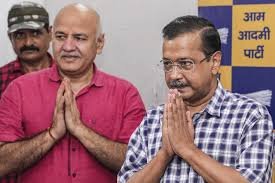
February 27, 2026: The collapse of one of India’s most politically explosive corruption cases unfolded dramatically on Friday, as a Delhi court discharged former Chief Minister Arvind Kejriwal, former Deputy Chief Minister Manish Sisodia, and 21 others in the excise policy case, delivering a sweeping rejection of the prosecution’s conspiracy claims and sharply questioning the integrity of the investigation conducted by the Central Bureau of Investigation (CBI).
In a strongly worded ruling, the court found that the prosecution had failed to present credible material establishing criminal intent or any overarching conspiracy behind the now-scrapped 2021–22 excise policy. Instead, the court said the documentary record reflected institutional deliberations and administrative processes, not criminal wrongdoing.
“There was no overarching conspiracy or criminal intent in the excise policy,” the court ruled, concluding that the central premise of the CBI’s case did not withstand judicial scrutiny.
Court Rejects Core Allegations
The court’s order dismantled the foundation of the prosecution’s narrative, which had alleged that the excise policy was deliberately structured to benefit select private liquor players in exchange for kickbacks.
Discharging Kejriwal, the court noted that serious allegations of conspiracy must be backed by substantive material evidence, not conjecture or inference. It found no documentary or testimonial evidence linking him to any criminal design, and observed that attributing a central conspiratorial role to a public official without clear proof risked undermining public trust in institutions.
Similarly, while discharging Sisodia, who had served as excise minister, the court held that the prosecution’s claims did not survive legal scrutiny. It observed that when policy files, internal communications, and official records were examined collectively, they revealed administrative decision-making rather than criminal intent.
आख़िर में अधर्म और अन्याय हारता है और सच ही जीतता है।
सत्यमेव जयते pic.twitter.com/GZghEdhJf3
— Arvind Kejriwal (@ArvindKejriwal) February 27, 2026
READ: OPS joins DMK in major political shift ahead of TN Polls
READ: Taliban claim Pakistan F-16 shot down as border conflict escalates
“The material on record reflects deliberations within the institutional framework,” the court said, adding that the prosecution’s theory suffered from “internal contradictions” and lacked evidentiary support.
The discharge of all 23 accused effectively closes, at least at this stage, one of the most consequential corruption prosecutions involving senior political leadership in recent Indian history.
Sharp Questions Over CBI Investigation
Beyond rejecting the prosecution’s case, the court also raised troubling questions about the conduct of the investigation itself.
The judge pointed to gaps in the investigative record, noting that certain opinions and statements were either not included or insufficiently explained. It questioned the prosecution’s reliance on selective interpretations of legal expert opinions, asking how the CBI had concluded that those opinions supported its case.
The court also expressed reservations about the prosecution’s use of the term “South Group,” a phrase used to describe an alleged cartel of liquor businessmen. It observed that the term lacked clarity and was not backed by concrete evidentiary support.
These observations amount to one of the most pointed judicial criticisms of a major federal investigation in recent years.
Kejriwal Reacts Emotionally: “Truth Has Won”
Reacting shortly after the verdict, Kejriwal became visibly emotional, describing the outcome as vindication after what he called years of political persecution.
“We always said that truth prevails. Today, truth has won,” he said, thanking the judge for delivering justice.
He described the case as the “biggest political conspiracy in independent India,” alleging that it was orchestrated by the Bharatiya Janata Party (BJP) to destroy the Aam Aadmi Party (AAP).
“The sitting Chief Minister was dragged from his house and put in jail for six months. Our Deputy Chief Minister was jailed for nearly two years. It was a completely fake case,” Kejriwal said.
He accused political opponents of weaponising investigative agencies and media narratives to damage his reputation and electoral prospects.
“For the sake of power, do not play with the country and the Constitution in this way,” he said, in a direct appeal to national leadership.
Political Fallout and Electoral Consequences
The excise policy case had far-reaching political consequences, dramatically reshaping Delhi’s political landscape.
Kejriwal was arrested in March 2024 while still serving as Chief Minister, an unprecedented development that sent shockwaves through Indian politics. Sisodia had been arrested earlier, in February 2023, and remained in custody for over 17 months.
Both leaders were eventually granted bail by the Supreme Court of India in separate orders in 2024.
However, the damage to AAP’s political standing had already been done. The allegations became a central campaign issue in the Delhi assembly elections of February 2025, in which the BJP secured a sweeping victory, ending AAP’s decade-long hold on power in Delhi.
Kejriwal stepped down as Chief Minister following his arrest, marking a dramatic turning point in his political career.
Origins of the Case
The controversy stemmed from the Delhi government’s 2021–22 excise policy, which aimed to reform the capital’s liquor retail system by increasing private sector participation and withdrawing government-run liquor outlets.
Investigators alleged that the policy was manipulated to increase profit margins for private retailers—from 5 percent to 12 percent—in exchange for kickbacks.
According to the prosecution, a group of liquor businessmen paid approximately Rs 100 crore in illegal payments to AAP leaders and intermediaries.
The case began after Delhi’s Chief Secretary submitted a report in July 2022 highlighting alleged irregularities. Acting on the report, Lieutenant Governor VK Saxena recommended a CBI investigation.
Parallel financial probes were conducted by the Enforcement Directorate (ED), which examined alleged money laundering linked to the policy.
Court Finds Policy Was Product of Institutional Process
However, the court found that the policy formulation process included consultations, internal reviews, and institutional approvals, undermining claims that it was secretly manipulated for criminal purposes.
It said the documentary evidence demonstrated administrative deliberation rather than clandestine conspiracy.
This conclusion directly contradicts the prosecution’s central claim that the policy was designed primarily as a vehicle for corruption.
Major Legal and Political Turning Point
The ruling marks a decisive legal victory for Kejriwal and Sisodia, potentially reshaping public perception of the case and raising broader questions about the use of investigative agencies in politically sensitive matters.
For Kejriwal personally, the verdict offers an opportunity for political rehabilitation after nearly two years of legal battles, imprisonment, and electoral defeat.
For investigative agencies, the court’s criticism underscores the importance of evidentiary rigor, especially in cases involving high-ranking elected officials.
And for India’s political landscape, the judgment closes one of the most contentious chapters in recent memory—one that brought down a government, altered electoral outcomes, and tested the boundaries between law enforcement and political conflict.
Whether the prosecution will appeal the ruling remains to be seen. But for now, the court’s message is clear: allegations alone cannot substitute for evidence, and criminal conspiracy must be proven—not presumed.