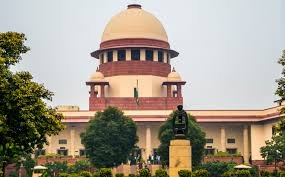
The Church Body’s plea in the Suprme Court seeks a stay on the enforcement of the Anti-conversion laws and a halt to arrests and criminal proceedings, citing violations of fundamental rights under Articles 14, 19, 21 and 25.
BY PC Bureau
New Delhi, February 2 — The National Council of Churches of India (NCCI) has filed a writ petition in the Supreme Court challenging the constitutional validity of anti-conversion laws enacted by 12 states — Odisha, Chhattisgarh, Madhya Pradesh, Arunachal Pradesh, Gujarat, Himachal Pradesh, Jharkhand, Uttarakhand, Uttar Pradesh, Karnataka, Haryana, and Rajasthan.
A Bench comprising Chief Justice of India Surya Kant and Justice Joymalya Bagchi tagged the matter with other pending petitions on religious conversion laws. The case will now be heard by a three-judge Bench.
Appearing for the petitioner, senior advocate Meenakshi Arora submitted that the present plea uniquely challenges the laws of Odisha and Arunachal Pradesh, in addition to others. She also informed the court that an interim application seeking a stay on the enforcement of these laws had been filed, citing rampant misuse.
“In many states, there is widespread abuse. Vigilante groups are harassing minorities by lodging false cases, encouraged by the reward systems built into these laws,” Arora told the court. She argued that the legislation incentivises private actors to initiate criminal proceedings, even in the absence of any genuine grievance, leading to arbitrary arrests and harassment.
The NCCI stated that it represents 32 member churches, 17 regional Christian councils, 18 all-India organisations and seven related agencies, collectively representing nearly 14 million people across India.
The plea argues that the impugned laws are discriminatory, arbitrary and vaguely worded, and violate fundamental rights under Articles 14, 19, 21 and 25 of the Constitution. Among the key contentions raised are:
First, the laws proceed on an unconstitutional presumption that religious conversions involving adults are inherently coerced or fraudulent. On this flawed premise, they mandate prior notice, inquiry and permission from district authorities, compelling individuals to justify deeply personal decisions to the State. This, the petition contends, violates liberty, privacy and freedom of conscience.
Second, the statutory definitions of “conversion”, “allurement”, “inducement” and “undue influence” are vague and overbroad, granting unchecked discretion to authorities and enabling arbitrary enforcement. Such vagueness, it argues, produces a chilling effect on free speech and legitimate religious propagation.
READ:‘Minutes From War’: Naravane’s Explosive Account Rahul Gandhi Sought to Read
Third, the laws permit unrelated third parties to lodge complaints without procedural safeguards, resulting in the routine invocation of criminal law by vigilante groups rather than aggrieved individuals. This exposes innocent persons to arrest, prolonged incarceration, denial of bail, financial hardship and social stigma, even without prima facie evidence.
Fourth, the Acts impose a reverse burden of proof on the accused, undermining the presumption of innocence and core principles of criminal jurisprudence. Certain provisions, particularly those singling out women as inherently vulnerable, are criticised as paternalistic and violative of women’s decisional autonomy under Articles 14 and 21.
READ: Fresh Concerns Over Girls’ Exploitation Linked to Trump’s Modeling Ties
The petitioner has sought declarations striking down these provisions, an interim stay on the enforcement of the laws, directions restraining police from making arrests under the impugned Acts, and a halt on criminal proceedings arising from FIRs registered under Sections 3 and 5 of the statutes.
Solicitor General Tushar Mehta appeared for the Union government and opposed the petition.
Notably, in December 2025, the Supreme Court had issued notice on a separate petition filed by the Catholic Bishops’ Conference of India challenging the Rajasthan Prohibition of Unlawful Religious Conversion Act, 2025.