Lebanon’s Prime Minister Najib Mikati condemned the strikes as a “blatant violation” and called for urgent international intervention. Hezbollah warned that the attacks “will not go unanswered.”
BY PC Bureau
April 8, 2026 — In what the Israeli military described as its largest coordinated operation since the current war began, Israel launched a massive wave of airstrikes on more than 100 targets across Lebanon on Wednesday. The strikes hit densely populated areas, including central Beirut, without prior warning—just hours after a U.S.-brokered ceasefire between Washington and Tehran was announced. Israeli officials made clear that the truce does not extend to its ongoing campaign against Hezbollah in Lebanon.
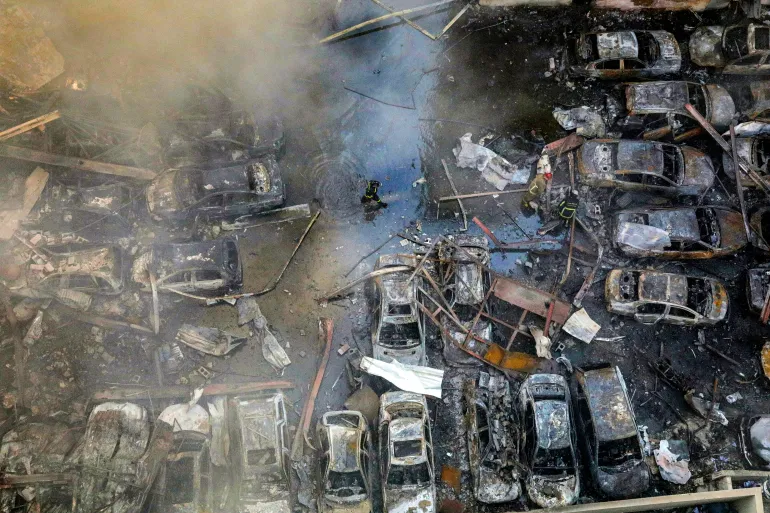
Lebanon’s Health Ministry said at least 89 people were killed and more than 700 injured in the attacks, with hospitals in Beirut and other regions overwhelmed by the scale of casualties. The assault marks the single largest day of Israeli strikes on Lebanese territory since the escalation of the 2026 Lebanon war in early March.
Israel has just carried out mass airstrikes across #Lebanon — over 100 strikes in just 10 minutes, on the very first day of a ceasefire.
What kind of ceasefire begins with bombardment?
Never trust Zionism.#Warcrime#HandsOffLebanon pic.twitter.com/h4bXhKlpzL
— ☫ Iran Embassy in The Hague, The Netherlands (@IRAN_in_NL) April 8, 2026
Timeline and Trigger
The strikes began during afternoon rush hour, catching civilians off guard. According to the Israel Defense Forces (IDF), around 50 fighter jets carried out the operation, striking over 100 Hezbollah-linked targets—including command centres and military infrastructure—within a span of approximately 10 minutes.
READ: Tehran Joins Peace Talks Under “Complete Distrust” of US: Iran VP
Targets included central Beirut, southern cities such as Tyre and Sidon, and areas in the Beqaa Valley. Israeli officials said the operation was prompted by intelligence indicating Hezbollah was redeploying forces and continuing to pose a threat, despite the pause in the broader U.S.-Iran conflict.
Prime Minister Benjamin Netanyahu and military officials emphasized that the Iran ceasefire is separate from the Lebanon front, underscoring that operations against Hezbollah will continue.
Civilian Toll and Humanitarian Strain
Lebanese authorities described scenes of devastation, particularly in Beirut, where residential neighborhoods were hit and emergency services struggled to respond. Many of the wounded are reported to be in critical condition.
The latest casualties add to an already severe toll. Since March 2, more than 1,500 people have been killed and over 4,800 injured in Lebanon, with the healthcare system under intense strain from weeks of continuous bombardment.
Background: Escalation of the Conflict
The current phase of the conflict began after Hezbollah launched rockets and drones into Israel in support of Iran during the U.S.-Israeli campaign. Despite earlier attempts at a ceasefire, hostilities have intensified in recent weeks.
While Israel has conducted frequent airstrikes, Wednesday’s operation stands out for its scale and intensity. Hezbollah has vowed retaliation, though its operational capacity has reportedly been weakened by sustained Israeli attacks.
Reactions
Lebanon’s Prime Minister Najib Mikati condemned the strikes as a “blatant violation” and called for urgent international intervention. Hezbollah warned that the attacks “will not go unanswered.”
International reactions have been cautious. The United States has not issued a detailed response on the Lebanon strikes, while Iran warned that continued escalation could undermine the fragile ceasefire. The United Nations and several European governments have called for immediate de-escalation to protect civilians.
The conflict has displaced more than 1.2 million people across Lebanon, with widespread destruction in southern regions. Despite the temporary U.S.-Iran truce, fears of a wider regional war remain.
As night fell, Israeli forces issued new evacuation warnings for parts of southern Lebanon, signaling the possibility of further strikes. Lebanese authorities have urged residents to remain alert and seek shelter.
The situation remains highly volatile, with further developments—including potential retaliation by Hezbollah—expected in the coming hours.