The controversy over Shaurya Chakra award has reopened older wounds in Manipur, where a long history of alleged fake encounters has already prompted Supreme Court intervention, making the latest honour appear, to critics, both premature and deeply unsettling.
By Navin Upadhyay
New Delhi | January 27, 2026: The Government of India’s decision to confer the Shaurya Chakra—one of the country’s highest peacetime gallantry awards—on CRPF Assistant Commandant Vipin Wilson has triggered intense public debate, raising fundamental ethical questions about the propriety of honouring contested acts while the incident in question remains under active judicial scrutiny.
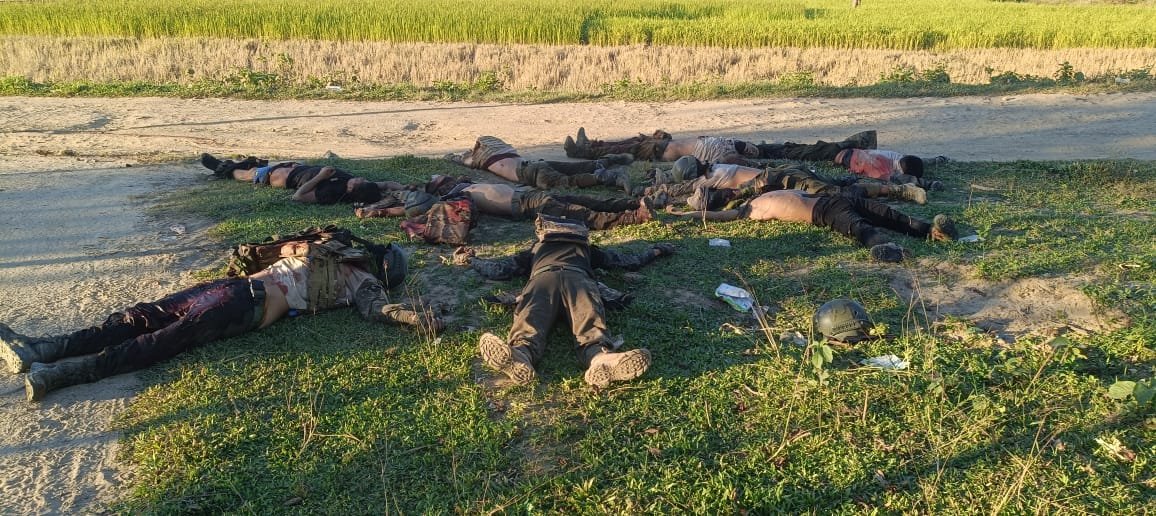
The award, announced on Republic Day 2026, recognises Wilson’s role in a November 11, 2024 operation in Manipur’s Jiribam district, where 10 individuals were killed at the Borobekra CRPF camp. Authorities described the episode as a successful counter-militancy operation that thwarted an attack by armed “Hmar militants.”
However, critics argue that conferring gallantry at this stage prematurely endorses an official narrative in a case marked by serious allegations of extrajudicial killings, torture, and evidence fabrication—allegations now before the Supreme Court and under investigation by the National Investigation Agency (NIA).
Advocate Vishwajeet Singh, who has filed a writ petition in the Supreme Court seeking a high-level probe into the Jiribam killings, has questioned the decision to confer the Shaurya Chakra on the CRPF officer involved. He said that the encounter is already under investigation by the NIA for alleged foul play, and that the conduct of the investigating agency itself is under scrutiny before the Supreme Court for purported mishandling of the probe.
“In such circumstances, bestowing a gallantry award on an officer who is a suspect in the case is highly questionable and shows disregard for the Supreme Court, especially when the matter remains sub judice,” he said.
READ: Baffling Silence: Manipur Governor’s Inaction Amid Burning of Kuki-Zo Village
READ:India–EU Seal ‘Landmark’ FTA, Slash Tariffs on Over 90% of Goods
Encounter or Execution: Competing Narratives
According to the CRPF and the Manipur government, a group of armed militants attacked the Borobekra police station and adjacent CRPF post around 3 pm, prompting retaliatory fire by a Quick Action Team led by Wilson. Ten alleged attackers were killed, and one CRPF constable sustained injuries.
This account forms the basis of the gallantry citation, which praises Wilson’s “exceptional bravery” in neutralising the threat.
Yet families of the deceased and Kuki-Zo organisations dispute this version entirely. They maintain that the victims were unarmed Hmar village volunteers who had entered the camp earlier that day to discuss local security concerns amid escalating ethnic violence. Petitioners allege that as the youths were leaving the premises, they were fired upon by Manipur Police commandos, followed by CRPF personnel using a Light Machine Gun from an armoured vehicle.
Eyewitness statements submitted to the Supreme Court describe a one-sided and disproportionate use of lethal force, undermining claims of an armed firefight.
Postmortem Reports: Evidence That Refutes Gallantry Claims
Central to the ethical controversy are postmortem examinations conducted at Silchar Medical College & Hospital between November 12 and 14, 2024. These medical findings sharply contradict the official “encounter” narrative and, by extension, the premise of gallantry.
According to the reports:
- Close-range gunshot wounds with blackening and abrasion collars indicate shots fired from less than two feet, inconsistent with combat situations.
- Severe blunt-force trauma, crushed bones, and deep lacerations suggest assault beyond the act of shooting.
- Signs of post-shooting violence, including smashed limbs and extensive facial injuries, point to possible torture.
Take one specific example, that of the postmortem report of 19-year-old Joseph Lalditum, one of the ten Hmar youths. His injuries are more consistent with deliberate close-range execution than a mutual firefight. Conducted at Silchar Medical College & Hospital on November 14, 2024, the report lists at least 14 gunshot entry wounds, many showing blackening, abrasion collars and contusion—classic signs of shots fired from less than two feet away. Several bullets entered from the back or side, with upward trajectories piercing vital organs including the heart (both ventricles), lungs and liver, causing massive internal bleeding.
Key findings include:
- Multiple close-range chest shots with blackening, one perforating the heart and exiting the back.
- Predominantly posterior entry wounds on thighs, legs and forearms, suggesting the victim was shot from behind or while prone.
- Non-ballistic blunt trauma: crushed thumb tip and lacerated fingers on the right hand, injuries inconsistent with gunfire and indicative of beating or torture.
- Fractured ribs, elbow dislocation and excessive wounds (over 28 documented injuries) pointing to disproportionate force.
The report estimates time of death at 72–96 hours before examination, aligning with the incident date. Cause of death was deferred pending chemical analysis of viscera and recovered bullets, but the pattern of wounds strongly contradicts the official claim of a defensive encounter against armed militants attacking a CRPF camp.
The findings leaned toward execution-style killing: close-range posterior shots, signs of incapacitation (e.g., knee wounds with blackening), and evidence of post-shooting assault undermine the narrative of a genuine firefight. The findings bolster allegations by victims’ families and Kuki-Zo groups that the incident was a “fake encounter” involving extrajudicial execution.
Families allege that when bodies were handed over on November 16, several bore visible mutilation, including missing eyeballs.
A History That Demands Greater Ethical Restraint
These allegations cannot be viewed in isolation. Manipur carries a long and judicially acknowledged history of extrajudicial killings under the guise of counter-insurgency operations. In 2017, the Supreme Court of India described the scale of alleged fake encounters in the state as “shocking,” noting that over 1,500 such killings had occurred since 2000, many involving civilians. The Court categorically held that the label of “militant” cannot justify suspension of the rule of law, even in disturbed areas, leading to court-monitored investigations into hundreds of cases.
Despite these interventions, accountability has remained limited. Convictions are rare, and human rights groups such as the Extrajudicial Execution Victim Families Association of Manipur (EEVFAM) have consistently documented patterns of staged encounters, custodial abuse, and post-incident fabrication of evidence. This legacy has deeply eroded public trust in security operations in the state. Against this backdrop, any contemporary use of lethal force—particularly one accompanied by forensic indicators of close-range killing—demands heightened ethical and institutional caution.
It is within this historical context that the Shaurya Chakra award becomes especially contentious. In a state where “encounters” themselves have been placed under constitutional suspicion, conferring gallantry honours before investigative and judicial processes are complete risks reviving the very culture of impunity the Supreme Court sought to dismantle.
Supreme Court Oversight and Ethical Restraint
The incident is currently under Supreme Court consideration following the writ petition filed on August 9, 2025, under Article 32. The petition seeks a court-monitored probe by the CBI or a Special Investigation Team, alleging a “fake encounter,” torture, and destruction of evidence.
Although the Union government transferred the case to the NIA in November 2024, the investigation has shown little visible progress. No arrests, suspensions, or disciplinary actions have been reported.
In November 2025, the Supreme Court issued notices to the NIA and the Manipur government, seeking a status report.
Legal experts argue that conferring a gallantry award while the matter remains sub judice risks prejudging facts, undermining investigative neutrality, and eroding public confidence in judicial independence.
The Ethical Question
Gallantry awards derive their legitimacy not merely from legality, but from moral clarity. In democratic systems, ethics demand restraint when facts are disputed and accountability unresolved.
Honouring an officer while forensic evidence points to close-range killings and while the Supreme Court examines the case risks transforming a symbol of courage into a signal of institutional endorsement—regardless of eventual judicial outcomes.
Deferring recognition until investigations conclude does not imply guilt. Rather, it preserves the sanctity of the honour, protects the credibility of the justice process, and respects the rights of victims’ families.
In conflict-scarred Manipur, where trust in state institutions is already fragile, symbolic decisions carry real consequences. The Shaurya Chakra, intended to honour unquestionable bravery, now stands at the centre of unresolved grief and legal uncertainty.