In a major policy push under Budget 2026, the government will establish rare earth corridors across four states to promote mining, processing, research and manufacturing of critical minerals.
BY PC Bureau
New Delhi, Feb 1, 2026 — In a major policy push aimed at cutting India’s heavy reliance on China for critical minerals, Finance Minister Nirmala Sitharaman on Sunday announced the creation of dedicated rare earth corridors in four states — Tamil Nadu, Kerala, Odisha and Andhra Pradesh — as part of the Union Budget 2026–27.
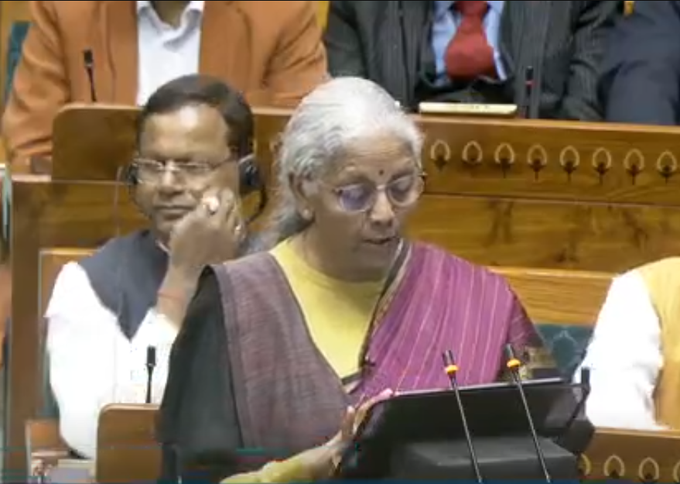
Unveiling the initiative during her Union Budget speech, Sitharaman said the corridors would promote mining, processing, research and manufacturing of rare earth elements, which are vital for sectors ranging from consumer electronics and electric vehicles to defence and aerospace.
“The scheme for rare earth permanent magnets was launched in November 2025. We now propose to support Odisha, Kerala, Andhra Pradesh and Tamil Nadu to establish dedicated rare earth corridors to strengthen domestic capabilities across the value chain,” she said.
Rare earth elements, a group of 17 minerals, are essential components in smartphones, electric vehicles, wind turbines, medical equipment and advanced weapons systems. China currently dominates the sector, accounting for about 60% of global mine production and nearly 90% of refining and magnet manufacturing, giving Beijing significant leverage over global supply chains.
This dominance has prompted countries worldwide to seek alternative supply routes, particularly as China periodically tightens export controls, triggering global shortages.
The government will develop Rare Earth Corridors across four coastal states; Kerala, Odisha, Andhra Pradesh, and Tamil Nadu.
These corridors will help India make permanent magnets that are essential for electric vehicles, renewable energy equipment, and defence technology. The… pic.twitter.com/pfnTtLDztn
— MyGovIndia (@mygovindia) February 1, 2026
Strategic and Political Implications
Beyond industrial benefits, the decision also carries strategic and political significance, as Tamil Nadu and Kerala — two of the selected states — are scheduled to go to the polls later this year. Analysts view the move as both an economic and political signal, underscoring the government’s focus on industrial investment and job creation in key regions.
The announcement aligns with the government’s broader push for ‘Atmanirbhar Bharat’ (self-reliant India), which Sitharaman identified as a core objective of the Union Budget 2026–27.
READ: Epstein Files Explode: Photos Show Prince Andrew on All Fours Over Woman
Rs 40,000 Crore Boost for Semiconductors
Complementing the rare earth initiative, Sitharaman also announced a Rs 40,000-crore allocation for the India Semiconductor Mission 2.0, aimed at strengthening domestic chip manufacturing and supply chains.
The mission will support industry-led research and training centres and focus on developing full-stack semiconductor equipment and materials based on Indian intellectual property, reducing reliance on imported technology.
Together, the twin initiatives signal a decisive push toward strategic autonomy in critical technologies, positioning India to play a larger role in global manufacturing and high-tech supply chains