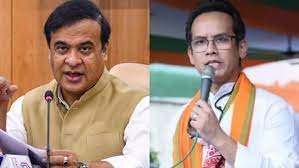
Large-scale evictions across lower Assam—conducted with bulldozers and heavy police presence—have displaced thousands, drawing criticism from rights groups and opposition leaders who allege targeted action against Bengali Muslim communities.
BY Navin Upadhyay
November 23, 2025: In flood-prone Assam, where the Brahmaputra River shapes both geography and politics, Chief Minister Himanta Biswa Sarma has triggered a major controversy with remarks widely viewed as openly communal. Speaking to reporters in Guwahati on November 22, Sarma said Bengali-speaking Muslims—whom he repeatedly referred to as “Miyas”—vote as a “consolidated bloc,” unlike “our people,” whose votes are split. “Lower Assam cannot be taken back from them,” he declared. “We must ensure they cannot proceed further… keep them under pressure… so that if not today, they are forced to leave after 10–15 years.”
The remarks, effectively outlining a long-term strategy to marginalise a community perceived as of Bangladeshi origin, reinforce an ongoing campaign built around religious polarisation. Sarma’s political messaging ahead of the 2026 Assembly elections mixes inflammatory speeches, aggressive eviction drives, and appeals to Hindu and indigenous anxieties—mirroring the “bulldozer justice” model popularised in Uttar Pradesh.
With the BJP aiming for more than 100 of Assam’s 126 seats alongside allies AGP, UPPL and BPF, Sarma’s strategy is unmistakable: create a sharp Hindu-versus-Muslim binary to consolidate votes.
Critics, including opposition parties and rights groups, accuse the government of weaponising governance to conduct “ethnic cleansing.” Supporters, however, frame it as a decisive attempt to curb “illegal infiltration.”
🚨“If BJP Isn’t in Power, Bangladeshi Miyas Will Take Over Assam Starting From Dispur” – Assam CM Himanta Mama🔥🤯
Without BJP in Assam, Assam’s political and demographic future could drastically shift pic.twitter.com/s6ltdGOmGq
— 𝐍𝐚𝐫𝐞𝐧𝐝𝐫𝐚 भारतीय 🌺🕉️ (@NarendraVictory) November 20, 2025
Demographic Fears and Political Memory
Assam’s politics remain shaped by the 1979–85 Assam Agitation and the 1985 Assam Accord, which sought to detect and deport post-1971 immigrants. Despite many Bengali-speaking Muslims being long-term residents or descendants of pre-Partition settlers, they continue to be cast as “Bangladeshi infiltrators.”
Per the 2011 Census, Muslims make up 34.2% of the state’s population—and approximately the same in 2025 by most independent estimates.
Sarma, who left the Congress for the BJP in 2015, has positioned himself as the custodian of Assam’s “indigenous identity” since becoming Chief Minister in 2021. His administration’s “3D” slogan—Detect, Delete, Deport—has overwhelmingly targeted Bengali-speaking Muslims, drawing accusations of selective enforcement and communal profiling.
In 2025, these operations intensified under the pretext of clearing “encroached” land. Evictions, however, have overwhelmingly affected Muslim families in districts like Dhubri, Goalpara, Lakhimpur and Nalbari.
Historians counter the ruling party’s claims of a demographic “takeover,” noting that Bengali-origin Muslims formed majorities in many lower Assam regions long before 1947.
Weaponising the ‘Miya’ Label
The vilification of “Miyas” forms the core of Sarma’s messaging. Once a slur, the term has been reclaimed by the community—but Sarma now uses it to suggest foreignness and illegitimacy.
On November 22, he urged “our people” to vote with the same unity as “Miyas,” framing the minority as an organised threat. In October, he vowed to “fight Miya Muslims” until his last day in office. Earlier statements blamed them for everything from rising vegetable prices to flood mismanagement.
In Silchar, he appealed to Bengali Hindus for “Hindu unity beyond linguistic divides,” positioning the BJP as the only safeguard against Muslim influence. BJP leaders have openly declared that the 2026 election will be fought on the axis of “indigenous vs Miya Muslim.”
Opposition leaders, including Congress MP Gaurav Gogoi, accuse Sarma of systematically alienating minorities, tribals and OBCs. Sarma responds by drawing a distinction between “Assamese Muslims” who support the BJP and “Mian Muslims” who “never will.”
This internal fragmentation allows the BJP to court certain Muslim subgroups while demonising others.
Bulldozers as Political Messaging
Nothing symbolises Sarma’s governance more than the bulldozer. In 2025, thousands of homes—mostly belonging to Bengali-origin Muslims—were demolished in eviction drives across multiple districts.
In November alone, more than 580 homes were flattened in Goalpara’s Dahikata Reserve Forest, displacing nearly 600 families. Sarma posted videos of the demolitions, declaring: “Eviction drives are NOT going anywhere, but the encroachers certainly are.”
Human Rights Watch reports that hundreds of ethnic Bengali Muslims have been expelled to Bangladesh without due process. A May eviction in Paikan turned deadly when police shot and killed protester Kutub Uddin Sheikh.
The Supreme Court issued notices in October over alleged unlawful and discriminatory evictions, with petitioners claiming homes were razed “in hot haste” while Hindu encroachers were spared.
At BJP rallies, leaders celebrated the demolitions with “Bangladeshi Go Back” chants, framing the operations as cultural warfare rather than administrative enforcement.
READ: AI-Generated ‘$1 Trillion Squad’ Photo of Tech Titans Breaks the Internet
READ: Huge Explosive Haul Near Uttarakhand School Sparks Panic
Stoking Hindu Anxiety
Sarma frequently warns that Hindus risk becoming a minority in Assam. In April, he urged tribal and Hindu communities to “unite or perish” in the face of “illegal Islamic immigration.”
He has accused critics of evictions of showing “bias against Hindu festivals” and flagged “irregular” land sales by Hindus to Muslims as evidence of demographic shifts.
While these appeals energise the BJP’s upper Assam base—including Bengali Hindus—they alienate tribal groups and Assamese-speaking Muslims, who say the state government is sacrificing social harmony for electoral gains.
The 2026 Calculus: Polarisation as Policy
With the election months away, Sarma’s rhetoric and governance style form a coherent strategy: manufacture a crisis, identify an enemy, and promise restoration through majoritarian assertion.
Analysts say the “indigenous vs. Miya” binary is a powerful electoral tool, especially amid the absence of updated census data. The BJP’s confidence rests on expanding this narrative while neutralising opposition coalitions.
Groups like Jamiat Ulama-i-Hind have demanded Sarma’s removal for “discriminatory governance,” but the state government appears emboldened, not deterred.
A Precarious Future
For displaced families living under tarpaulin sheets, the political theatre carries devastating consequences. Trust between communities—always fragile in Assam—is fraying further.
As one evicted resident told Religion News Service in August, it feels like “ethnic cleansing under the guise of governance.”
Whether Sarma’s hardline strategy delivers electoral gains or pushes Assam toward deeper unrest remains to be seen. But one reality is already clear: bulldozed homes can be rebuilt, yet bulldozed harmony may not return for generations.