Global markets reacted instantly, with oil prices jumping above $110 per barrel amid fears of supply disruptions and wider conflict in the Gulf.
BY PC Bureau
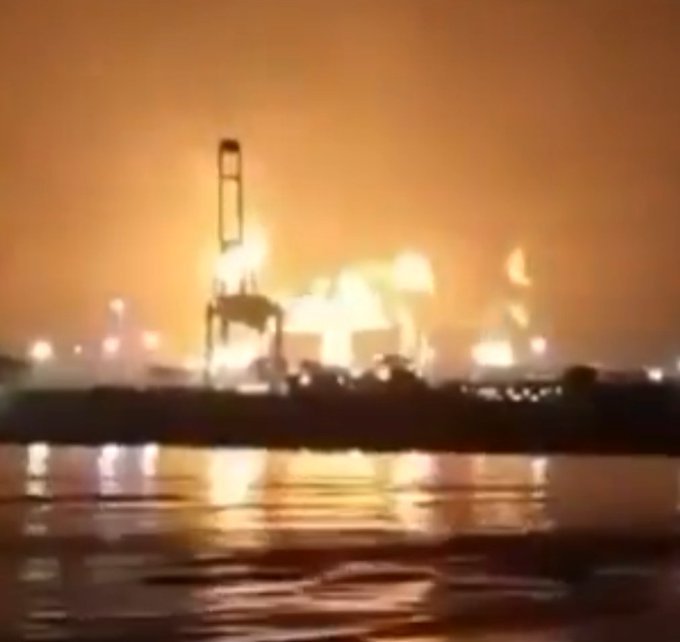
March 19, 2026: The escalating Middle East conflict entered a dangerous new phase on March 19, 2026, as Iran launched ballistic missile strikes on Qatar’s critical energy infrastructure, targeting Ras Laffan Industrial City—the world’s largest liquefied natural gas (LNG) hub.
State-owned QatarEnergy confirmed that the facility suffered extensive damage in two attacks within 12 hours. The first strike, late Wednesday, caused significant structural impact, while a second barrage early Thursday ignited major fires and compounded the destruction. Qatar’s Interior Ministry said emergency and civil defence teams were swiftly deployed to contain the blazes. No casualties have been reported so far.
Located about 80 km north of Doha, Ras Laffan is the backbone of Qatar’s economy and a linchpin of global energy supply, exporting LNG to key markets across Asia and Europe.
Brent crude surges past $110 as Israel–Iran conflict hits #energy infrastructure. Reports say Israel struck Iran’s South Pars #gas field, while Iran retaliated with attacks on a major fuel hubs in #Qatar and Saudi Arabia, raising fears of wider supply disruptions.… pic.twitter.com/ROrp2EI47I
— Peregraf (@PeregrafNews) March 18, 2026
READ: Trump Upset Over Israel’s Iran Gas Hit, Warns Against Further Strikes
The strikes are widely seen as retaliation by Iran’s Revolutionary Guards following recent attacks—blamed on the United States and Israel—on Iran’s own energy infrastructure, including the South Pars gas field, which it shares with Qatar. Tehran had earlier warned of “powerful action,” explicitly threatening Gulf energy assets.
Doha condemned the strikes as a “brutal targeting” and a “dangerous escalation,” calling them a violation of its sovereignty. In a sharp diplomatic response, Qatar declared Iranian military and security officials persona non grata and ordered their expulsion. The Foreign Ministry said the attacks posed a direct threat to national security and regional stability.
Global markets reacted immediately. Oil prices surged past $110 per barrel amid fears of supply disruption, while major Asian indices fell sharply—Japan’s Nikkei 225 dropped 2.7%, South Korea’s Kospi 2.6%, Hong Kong’s Hang Seng 1.4%, and Taiwan’s Taiex 1.4%.
Analysts warn that any prolonged disruption at Ras Laffan could tighten global energy supplies significantly, given Qatar’s central role in LNG exports.
The attack marks a sharp escalation in the widening Iran-U.S.-Israel conflict, now directly impacting Gulf states and their vital infrastructure. Regional powers, including Saudi Arabia—which has also reported strikes on its refineries—have raised alarm, urging restraint as fears grow of a broader war with serious implications for global energy security.