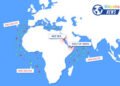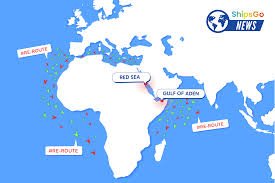
Any strike near the Bab el-Mandeb Strait could disrupt access to the Suez Canal, threatening global trade and energy flows. With the Strait of Hormuz already under strain, simultaneous pressure on both chokepoints could trigger a major النفط and supply chain shock worldwide.
By PC Bureau
March 26, 2026: The prospect of a second major maritime chokepoint crisis is rapidly emerging in the Middle East, as Yemen’s Iran-aligned Houthi movement signals it is prepared to resume attacks on Red Sea shipping routes in support of Tehran. The warning comes at a time when the Strait of Hormuz is already under severe disruption, raising fears of a cascading global energy and trade shock.
A senior Houthi official told Reuters that the group is “fully militarily ready with all options,” indicating that operations could be launched at a time of its choosing. While no immediate timeline was specified, the statement underscores the growing likelihood that the conflict could expand beyond the Gulf into the Red Sea, opening a dangerous new front.
READ: Iran Strikes Cripple U.S. Bases Across the Middle East, Troops Camp in Hotles
At the center of these concerns lies the Bab el-Mandeb Strait, a narrow but vital maritime passage connecting the Red Sea to the Gulf of Aden and onward to the Indian Ocean. Any disruption here would directly threaten access to the Suez Canal, one of the world’s most critical arteries for global trade.
A Strategic Chokepoint Under Threat
The Bab el-Mandeb Strait handles a significant share of global shipping, including oil, liquefied natural gas, and container traffic moving between Asia, Europe, and North America. Its importance has grown even more acute in the current scenario, as instability in the Strait of Hormuz has already disrupted Gulf energy exports.
According to Reuters, citing an unnamed Houthi leader, the Houthis are prepared to resume strikes against commercial and naval shipping in and around the Bab el Mandeb Strait and the Red Sea, potentially opening a second front against a second key thoroughfare of trade in the… pic.twitter.com/UF0EboVUYj
— OSINTdefender (@sentdefender) March 26, 2026
If Houthi forces begin targeting vessels in the Red Sea—through missiles, drones, or naval mines—the consequences could be immediate and far-reaching:
- Shipping companies may divert vessels around the Cape of Good Hope, adding weeks to transit times.
- Insurance premiums for vessels transiting the region could surge dramatically.
- Global oil prices may spike further, compounding inflationary pressures worldwide.
- Supply chains, already strained by ongoing conflicts, could face renewed disruptions.
In effect, simultaneous pressure on both Hormuz and Bab el-Mandeb would squeeze the world’s energy and trade lifelines from two ends, amplifying economic shock far beyond the Middle East.
Houthis as a Force Multiplier
The Houthis have previously demonstrated their ability to disrupt Red Sea traffic using a mix of asymmetric tactics—anti-ship missiles, explosive drones, and fast-attack boats. Their renewed readiness signals Tehran’s broader strategy of leveraging allied groups across the region to expand pressure on adversaries without direct conventional confrontation.
By threatening the Red Sea route, the Houthis effectively extend Iran’s strategic reach from the Persian Gulf to one of the busiest maritime corridors in the world. This creates a multi-theatre challenge for the United States and its allies, who would need to secure not just one, but multiple critical waterways simultaneously.
Escalatory Signals From Tehran
The warning from Yemen coincides with increasingly assertive rhetoric from Iran’s political leadership. Parliamentary speaker Mohammad Bagher Ghalibaf praised recent operations by Hezbollah, claiming the group conducted “87 operations in a single night” and inflicted heavy losses on Israeli forces.
In a series of public statements, he described Hezbollah as a “pride” force and warned that further “surprises” were in store—remarks widely interpreted as signaling continued escalation across multiple fronts.
Taken together, the messaging suggests a coordinated posture: while Iran faces pressure in the Gulf, its regional allies are positioned to activate additional نقاط of leverage, from Lebanon to Yemen.
Why the Red Sea Route Matters Now
Under normal conditions, the Red Sea–Suez Canal corridor carries roughly 10–15% of global trade and a significant portion of Europe-bound energy supplies. Its importance has sharply increased in the current crisis for three key reasons:
- Alternative to Hormuz Disruptions: With the Strait of Hormuz under strain, the Red Sea route becomes even more critical for rerouted shipments and global energy balancing.
- Europe’s Energy Lifeline: Much of Europe’s oil and LNG imports pass through the Suez Canal. Any disruption would directly affect European energy security.
- Global Supply Chain Backbone: Container traffic linking Asian manufacturing hubs to European markets depends heavily on this corridor. Even partial disruption could ripple across global markets.
In strategic terms, control or disruption of the Red Sea route offers leverage far beyond the immediate battlefield—it becomes a tool capable of shaping global economic conditions.
A Two-Chokepoint Crisis?
The emerging situation raises the specter of a “two-chokepoint crisis,” where both Hormuz and Bab el-Mandeb are simultaneously threatened. Such a scenario would be unprecedented in modern times, effectively placing the world’s most critical maritime energy corridors under sustained risk.
For policymakers in Washington and allied capitals, the challenge is no longer confined to a single theater. Securing maritime trade routes may now require a broader, coordinated naval presence spanning the Persian Gulf, the Arabian Sea, and the Red Sea.
While no immediate Houthi operation has been confirmed, the signal of readiness alone is enough to unsettle markets and strategic planners. Shipping companies, insurers, and governments are already factoring in the possibility of renewed disruption.
If attacks materialize, the Red Sea could quickly transform from a transit corridor into an active conflict zone—deepening the economic and geopolitical consequences of an already widening war.
For now, the warning stands: the crisis may no longer be confined to Hormuz. Another maritime fault line is forming—and the world is watching closely.