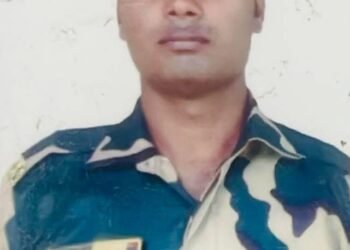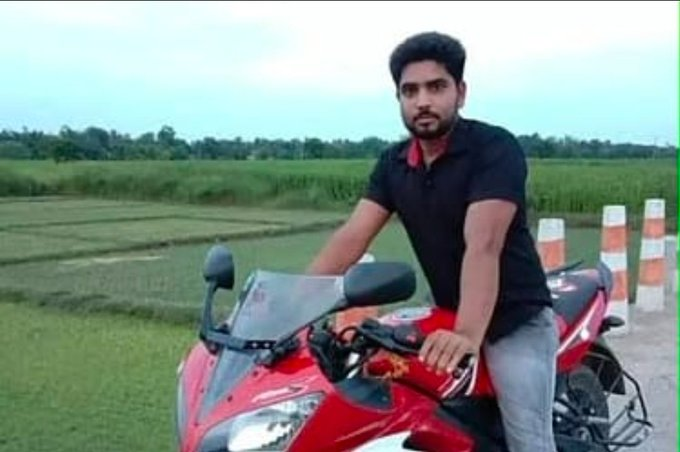
The killing of a second Hindu man comes after another high-profile lynching in Mymensingh, deepens concerns over law and order amid Bangladesh’s fragile political transition.
BY PC Bureau
December 25, 2025 — A Hindu man accused of extortion was beaten to death by a group of villagers in Bangladesh’s Rajbari district late Wednesday night, in the latest incident of mob violence amid continuing political instability and law-and-order challenges in the country.
The victim, identified as Amrit Mondal, also known as Samrat, was a resident of the same village in Pangsha upazila where the attack occurred. The assault took place around 11 pm, according to police.
Assistant Superintendent of Police (Pangsha Circle) Debrata Sarkar said officers rushed to the spot after receiving information about the beating and found Mondal in critical condition. He was taken to the Pangsha Upazila Health Complex, where doctors pronounced him dead at around 2 am on Thursday.
Police said Mondal had a criminal record, with two cases previously filed against him. Investigators allege he was part of a gang involved in extortion and other illegal activities in the area. During the incident, one of Mondal’s associates was arrested, and police recovered a pistol and a one-shooter firearm from his possession.
Authorities stressed that the killing appeared to stem from criminal vigilantism, though they condemned the act as unlawful and said mob justice would not be tolerated.
READ: “Liberated Twice”: Tarique Rahman Declares at Dhaka Homecoming Rally
Recent Lynching Raises Alarm
Mondal’s killing comes just days after the lynching of Dipu Chandra Das, a 27-year-old Hindu garment factory worker, in Bhaluka, Mymensingh district, on December 18. Das was beaten to death by a mob, his body hung from a tree along the Dhaka–Mymensingh highway, and later set on fire.
Initial claims suggested the attack was linked to alleged blasphemy. However, investigations by police and the Rapid Action Battalion (RAB) later found no evidence of religious insult, pointing instead to a workplace dispute, possibly related to a promotion or forced resignation. At least 10 to 12 people have been arrested in that case. The interim government described the killing as having “no place in the new Bangladesh.”
Broader Context: Political Transition and Minority Fears
These incidents unfold amid heightened uncertainty following the ouster of former Prime Minister Sheikh Hasina in August 2024, after a student-led uprising against her government. Hasina fled to India as protests spiralled into violence, leading to the formation of an interim government headed by Nobel laureate Muhammad Yunus.
Bangladesh’s Hindu minority—about 8% of the population—has historically been perceived as aligned with Hasina’s Awami League, making some members vulnerable during periods of political upheaval. Minority rights groups reported over 2,000 attacks on Hindus and other minorities between August 4 and 20, 2024, including assaults on homes, temples, and businesses.
While rights groups note that the scale of targeted violence declined in 2025, sporadic incidents continue, often linked to criminal disputes, political rivalries, or mob vigilantism, exacerbated by weakened policing.
Concerns have also intensified following the December 12 shooting death of student leader Sharif Osman Hadi, a key figure in the 2024 uprising. His killing triggered fresh protests, arson attacks on media offices, and renewed unrest, further heightening fears among minority communities.
Calls for Rule of Law
The Yunus-led interim administration has repeatedly condemned mob violence and pledged protection for all citizens. However, critics and international observers warn that impunity, extremist mobilisation, and political instability continue to pose serious risks ahead of parliamentary elections scheduled for February 2026.
Police in Rajbari district have launched a formal investigation into Mondal’s killing and said arrests are expected. Authorities reiterated that mob justice—regardless of the alleged crimes of the victim—will be prosecuted under the law, as Bangladesh seeks to stabilise its fragile transition and reaffirm its secular foundations.