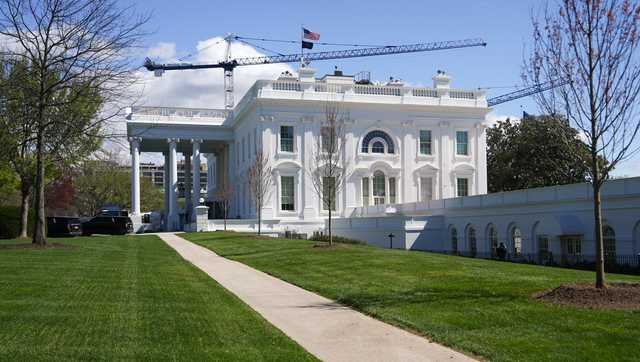
Judge Richard Leon ruled that the president is merely a “steward,” not the owner of the White House—effectively blocking unilateral redesign of the historic site.
BY PC Bureau
April 1, 2026: While missiles flew over Iran and oil prices performed their best impression of a SpaceX launch, back in Washington, a different kind of grand operation was underway: turning the White House into what critics are now calling “Mar-a-Lago: Federal Edition.”
Yes, amid war briefings, economic tremors, and global तनाव, President Donald Trump found time for what truly matters—ballroom expansion. Not diplomacy. Not inflation. Chandeliers.
The plan? A modest $400 million add-on. Just a casual 90,000-square-foot ballroom where world leaders could presumably waltz while discussing sanctions. The East Wing? Bulldozed. History? Renovated. Taste? Subjective.
READ: Trump Eyes Iran Exit as War Leaves Global Economy Reeling
READ: Tech Giant Oracle Lays Off 12,000 Employees in India
But then entered an unexpected party crasher: the judiciary.
U.S. District Judge Richard Leon stepped in with the legal equivalent of “music off,” halting construction unless Congress explicitly signs off. Translation: No, you cannot redecorate the People’s House like it’s a penthouse suite you just impulse-bought.
In a line that will likely outlive the ballroom renderings, the judge reminded the President that he is merely a “steward,” not the owner. A subtle but devastating clarification in an administration that had apparently upgraded its access level from resident to landlord.
The administration’s defense? It’s privately funded! It’s beautiful! It’s going to be the greatest ballroom anyone has ever seen, maybe in history, maybe ever. Critics, meanwhile, suggested that demolishing a historic wing during a presidency already juggling a war and economic instability might not be the most… grounded prioritization.
Meanwhile, the National Trust for Historic Preservation—a group usually associated with saving old buildings, not stopping new ones—filed suit to remind everyone that even iconic homes come with rules. Apparently, “because I said so” is not yet a recognized clause in federal law.
Trump, never one to accept a quiet rejection, responded by labeling opponents “left-wing lunatics,” which in 2026 Washington roughly translates to “people who read zoning regulations.”
The case now heads to appeals court, where lawyers will debate a profound constitutional question:
Can a sitting president knock down part of the White House to build a bigger room for parties—without asking anyone first?
For now, the ballroom exists only in glossy renderings—vast, gleaming, and gloriously hypothetical. A monument not to power, but to pause.
Because even in an era of executive orders, airstrikes, and all-caps social media posts, one truth remains stubbornly intact:
You can start a war.
You can shake the global economy.
But you still can’t install a 1,000-seat ballroom in the White House without paperwork.