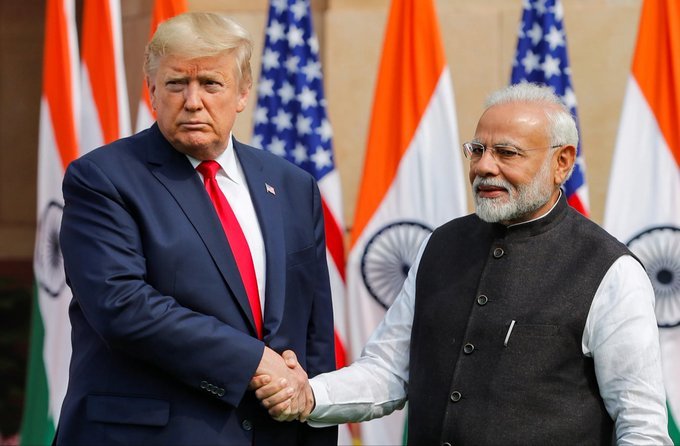
Analysts suggest the conversation between Trump and Modi may pave the way for tariff relief or a mini-trade deal, though no official readout has been released.
BY PC Bureau
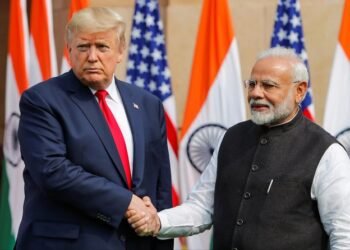
New Delhi, February 2, 2026 — U.S. President Donald Trump held a telephone conversation with Indian Prime Minister Narendra Modi on Monday, according to confirmation from the U.S. Ambassador to India, Sergio Gor.
The call, coming amid persistent strains in bilateral trade relations over high U.S. tariffs on Indian imports, was first announced by Ambassador Gor on social media platform X (formerly Twitter). In a post that quickly gained traction, Gor stated: “President Trump just spoke with Prime Minister Modi. STAY TUNED…”
The brief announcement hinted at potential follow-up developments, though neither the White House nor the Indian Prime Minister’s Office had released an official readout by late Monday evening. Details on the duration of the call or specific topics discussed remained limited in immediate public statements.
The conversation takes place against a backdrop of longstanding U.S.-India frictions over trade, particularly Washington’s imposition of tariffs of up to 50% on certain Indian goods — including a 25% levy linked to India’s continued purchases of Russian oil. These measures, introduced in 2025, have affected key Indian exports such as textiles, chemicals, and seafood, prompting New Delhi to seek relief while emphasizing its energy security needs.
Recent reports indicate that trade negotiations have progressed unevenly. U.S. officials have described Indian proposals as constructive, yet no comprehensive agreement has materialized. Earlier accounts from 2025 highlighted multiple phone calls between the leaders — at least eight in that year alone — covering trade, defense, technology, energy, and regional security matters. A notable breakdown was attributed by some U.S. sources to differing expectations around direct leader-level engagement to finalize deals.
President Trump just spoke with Prime Minister Modi. STAY TUNED… pic.twitter.com/IFcxrJj04m
— Ambassador Sergio Gor (@USAmbIndia) February 2, 2026
The leaders’ personal rapport has remained a focal point. Trump has repeatedly referred to Modi as a “friend” and praised his leadership in past interactions, including birthday wishes and acknowledgments of India’s role in global issues. Modi, in turn, has described conversations as “warm and engaging,” stressing shared commitments to global peace, stability, and prosperity.
READ: Mamata Walks Out of CEC Meet Over Bengal Voter List Row
Beyond trade, the call may have touched on broader strategic priorities. The India-U.S. Comprehensive Global Strategic Partnership (often referred to as COMPACT) continues to drive cooperation in defense, critical technologies, and counterterrorism. Defense ties, including India’s procurement of American equipment such as Apache helicopters, have been highlighted in recent remarks by Trump, who noted efforts to address delivery delays.
The timing also coincides with ongoing geopolitical dynamics, including U.S. positions on conflicts involving Russia and Ukraine, as well as regional stability in the Indo-Pacific. India’s balancing act between Western partnerships and relations with Moscow remains a sensitive issue.
Neither side has confirmed whether the discussion included potential relief on tariffs, progress toward a mini-trade deal, or invitations for future in-person meetings. Trump’s earlier comments in 2025 suggested possibilities for Modi to visit the White House, though no firm dates have emerged.
Analysts view the call as a positive signal of continued high-level engagement despite challenges. With the U.S. pushing for “fair and reciprocal” trade and India advocating for balanced partnerships, the conversation underscores the leaders’ preference for direct dialogue to manage differences.
Further details are expected from official channels in the coming days. The development has already sparked widespread commentary on social media, with users speculating on implications for tariffs, defense deals, and the future trajectory of one of the world’s most important bilateral relationships.