BY PC Bureau
New Delhi| January 18, 2026: The United States, under President Donald Trump, has invited both India and Pakistan to join a proposed international body tentatively called the “Board of Peace,” envisioned to oversee post-war reconstruction, governance support, and stabilization efforts in the Gaza Strip following the recent Israel–Hamas ceasefire, according to multiple reports familiar with the development.
The outreach is part of a broader diplomatic initiative that has reportedly involved invitations to nearly 60 world leaders, as the Trump administration advances what it describes as Phase Two of its Gaza peace framework, announced earlier this month. The proposed body is expected to play a supervisory role over reconstruction funding, administrative transition, and regional coordination in Gaza during a post-conflict phase.
According to US officials cited in international media, the Board of Peace would function as a high-level oversight and coordination platform, drawing its mandate from UN Security Council Resolution 2803, adopted in November 2025, which endorsed the US-brokered ceasefire and welcomed international mechanisms to support Gaza’s recovery.
Breaking: PM Modi formally invited by US President Donald to be part of the Gaza Board of Peace. Trump sent letter to PM Modi on 16th December
— Sidhant Sibal (@sidhant) January 18, 2026
Structure and Mandate
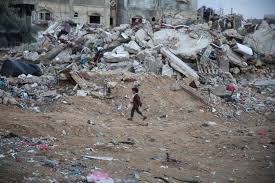
The proposed board is expected to oversee a Palestinian technocratic interim administration, tasked with restoring public services, rebuilding civil institutions, and managing day-to-day governance in Gaza during a transitional period. Its broader mandate would include reconstruction planning, investment mobilisation, donor coordination, and capacity-building following years of conflict that have left large parts of the enclave devastated.
While Gaza remains the immediate focus, analysts say the Trump administration has presented the board as a potential template for post-conflict governance in other global crises, operating as an invitation-based forum led by the United States rather than through traditional UN structures.
Reported Members
The White House has reportedly identified an initial group of senior figures for the board’s executive framework, including US Secretary of State Marco Rubio, presidential adviser Jared Kushner, former UK Prime Minister Tony Blair, special envoy Steve Witkoff, World Bank President Ajay Banga, financier Marc Rowan, and senior US national security officials.
A parallel operational structure for Gaza is said to involve regional and international figures, including Turkish, Emirati, and UN representatives, alongside an international stabilization force tasked with security coordination and police training.
Several countries—including Egypt, Turkey, Argentina, Canada, Pakistan, and Paraguay—are reported to have received invitations or expressed interest, while European allies such as France and Germany are also believed to be under consideration.
Pakistan received the US invitation to join the Board of Peace on Gaza. https://t.co/WjSSVrwH7M
— Sahar Baloch (@Saherb1) January 18, 2026
READ: Thousands of Greenlanders March Against Trump’s Takeover Push
India’s Possible Role
India’s inclusion reflects Washington’s recognition of New Delhi’s growing diplomatic influence and its longstanding ties across the Middle East, including with Israel, Arab states, and Palestine. India has consistently provided humanitarian assistance to Gaza and supported ceasefire efforts, while maintaining strategic relations with Israel.
Participation could allow India to contribute expertise in infrastructure development, institutional rebuilding, and development finance—areas aligned with its broader global development engagement.
However, the proposal has also attracted criticism internationally. Some observers argue the initiative risks sidelining established UN mechanisms and concentrating decision-making authority within a US-led structure. Reports suggesting that long-term participation may be linked to substantial financial commitments have also raised concerns about equity and influence.
Israel has reportedly expressed reservations about certain proposed participants, while some Palestinian factions have criticised the framework as skewed in Israel’s favour.
Indian foreign policy experts say New Delhi is likely to assess the proposal carefully, weighing its commitment to multilateralism against the opportunity to shape post-conflict reconstruction efforts in Gaza.
The Ministry of External Affairs has not yet issued an official response. Further clarity is expected in the coming days, possibly on the margins of upcoming international forums.
This is a developing story.