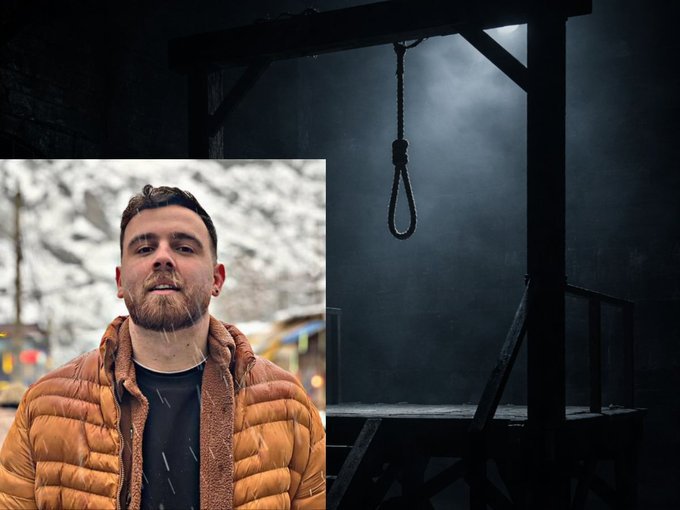
Protester Sentenced to Death: Erfan Soltani, 26, was arrested on January 8 for participating in nationwide demonstrations and has reportedly been sentenced to death following a fast-track process.
BY PC Bureau
January 13, 2026: Iran is preparing to carry out what could be the first hanging execution linked to the ongoing nationwide anti-Khamenei protests, with a 26-year-old protester facing imminent execution, according to media and human rights reports.
Erfan Soltani, a resident of Fardis in the Karaj suburb near Tehran, was arrested on January 8 for allegedly participating in protests against Supreme Leader Ayatollah Ali Khamenei. The demonstrations, which began in early January over worsening economic conditions, have since expanded into a broader movement challenging Iran’s political leadership.
According to human rights groups, Soltani has been sentenced to death and is scheduled to be executed on Wednesday, January 14. If carried out, the execution would mark the first reported hanging during the current wave of unrest.
While hundreds of people are reported to have died during the protests—largely due to live-fire shootings by security forces—Soltani would be the first protester executed by hanging in this phase of the crackdown.
READ: China Rejects India’s Claim on Shaksgam Valley
READ: From Code to Call Centres: AI’s Quiet Takeover of Indian Jobs
A report by Israel- and US-based outlet Jfeed said Soltani’s case could signal the start of fast-track executions intended to deter further demonstrations. The report also alleged serious violations of due process, including denial of access to legal counsel and the inability to mount a proper defence.
TEHRAN, Iran, January 13 —Iranian authorities are preparing to carry out the first reported execution by hanging directly linked to the nationwide anti-Khamenei protests, sentencing 26-year-old Erfan Soltani pic.twitter.com/GoHvxTMXHZ
— 21 South News (@21SouthNews) January 13, 2026
According to the Hengaw Organisation, Soltani’s family was informed of the death sentence on January 11 and was permitted only a brief 10-minute meeting with him afterward. The family was reportedly kept uninformed about the authority that arrested him and the progress of the case until the sentence was announced.
The protests erupted amid severe economic distress, a sharp decline in the value of the Iranian rial, and soaring inflation. What began in Tehran’s bazaars quickly spread to other cities, with shopkeepers, students, and ordinary citizens taking to the streets to demand economic relief and political accountability.
Iranian authorities have not publicly commented on Soltani’s case. The developments come amid mounting international concern over Iran’s handling of the protests and allegations of widespread human rights abuses.