The Enforcement Directorate’s raids on I-PAC and its co-founder Pratik Jain have sparked a full-blown political confrontation in West Bengal, with Chief Minister Mamata Banerjee leading a massive protest march in Kolkata and accusing the BJP-led Centre of misusing central agencies ahead of the 2026 Assembly elections.
BY PC Bureau
January 9, 2026: The confrontation between the BJP-led Centre and the Trinamool Congress government in West Bengal intensified on Friday, a day after the Enforcement Directorate’s high-profile raids on the Indian Political Action Committee (I-PAC) triggered political outrage, legal sparring and street protests led by Chief Minister Mamata Banerjee.
The ED on January 8 conducted simultaneous searches at multiple locations, including I-PAC’s Salt Lake office in Kolkata and the residence of its co-founder Pratik Jain on Loudon Street. The raids are part of a money laundering probe linked to an alleged coal smuggling syndicate, in which the agency claims nearly ₹20 crore in “proceeds of crime” was routed to I-PAC through hawala channels. The alleged coal pilferage network is linked to Anup Majee, also known as Lala.
The searches quickly escalated into high political drama when Banerjee arrived at Jain’s residence during the raid. The ED has alleged that the chief minister walked out with files — including a prominently visible green folder — and later reached the I-PAC office, where documents, a laptop, a mobile phone and other electronic devices were allegedly removed in the presence of her aides.
Mamata di protesting in the streets in a march against the illegal raids of ED on IPAC office in which she reached just in time to take confidential strategy documents of Trinamool Congress regarding upcoming elections. pic.twitter.com/YdcLL4xhr4
— SDutta (@KhelaHobePart2) January 9, 2026
In petitions filed before the Calcutta High Court, the ED accused Banerjee of obstructing officials, intimidating officers on duty and forcibly removing potential evidence, amounting to violations of the Prevention of Money Laundering Act. The agency has sought a CBI probe into Banerjee’s role, as well as that of senior state police officials.
I-PAC and the Trinamool Congress have strongly denied the allegations, challenging the legality of the raids and claiming they were politically motivated. The party alleged the searches were aimed at seizing sensitive election-related material, including campaign strategies and candidate data, ahead of the 2026 West Bengal Assembly elections expected in March–April.
READ:Bengal Political Drama Shifts to Delhi as TMC MPs Detained Outside Shah’s Office
Adding to the legal complexity, Jain’s family filed a police complaint accusing the ED of theft of documents during the searches, while Banerjee lodged complaints against ED officials and CAPF personnel.
Proceedings in the Calcutta High Court on Friday were briefly disrupted due to heavy overcrowding, prompting Justice Suvra Ghosh to adjourn the matter. With the court closed over the weekend, the case will now be heard on Wednesday, January 14.
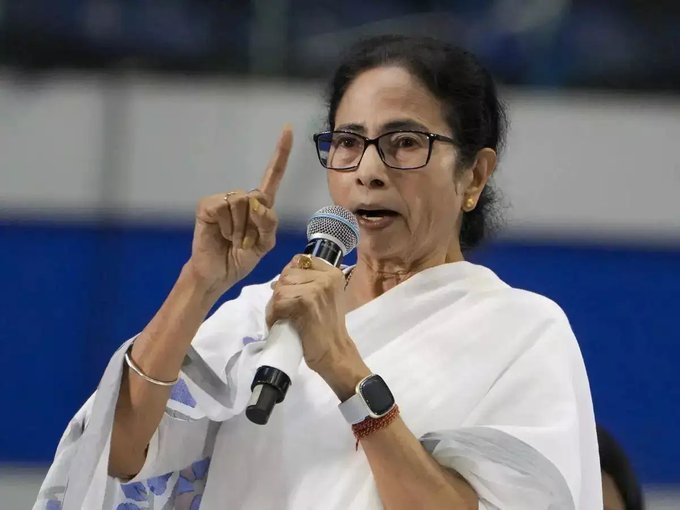
Even as the legal battle unfolded, Banerjee took the political fight to the streets on Friday, leading a nearly 5-km protest march from Jadavpur’s 8B Bus Stand to Hazra Crossing. Senior TMC leaders, ministers, MPs, MLAs and thousands of supporters joined the foot march, with crowds lining the route amid slogans accusing the Centre of weaponising central agencies for electoral gains.
The protest, marked by chants, singing and conch shells, carried a defiant tone. Banerjee accused the BJP of attempting to “steal” her party’s internal data and condemned the detention of TMC MPs, including Mahua Moitra and Derek O’Brien, during protests in Delhi outside Union Home Minister Amit Shah’s office.
The BJP mounted a sharp counter-attack, with senior leader Ravi Shankar Prasad accusing Banerjee of being “knee-deep in corruption” and attempting to shield incriminating material. He alleged that her intervention during the raids suggested an effort to protect sensitive evidence that could implicate her or the Trinamool Congress.
The episode underscores the deepening Centre–state confrontation in West Bengal, where the use of central agencies has become a flashpoint ahead of high-stakes elections. With accusations of political vendetta on one side and obstruction of justice on the other, the Calcutta High Court’s next hearing is expected to play a crucial role in shaping the course of the standoff.