PM Modi said the Prena Sthal reflects the BJP’s belief in recognising diverse national icons beyond a single political family. The 65-acre memorial complex, built at a cost of around ₹230 crore, honours Vajpayee, Syama Prasad Mookerjee and Deendayal Upadhyaya.
BY PC Bureau
December 25, 2025: Prime Minister Narendra Modi on December 25, 2025, visited Lucknow to commemorate the 101st birth anniversary of former Prime Minister and Bharat Ratna awardee Atal Bihari Vajpayee, marking the occasion with the inauguration of the Rashtriya Prerna Sthal, a grand national memorial complex dedicated to key figures of India’s political and ideological history.
Spread across nearly 65 acres and built at an estimated cost of ₹230 crore, the Rashtriya Prerna Sthal—also referred to as Rashtra Prerna Sthal—honours the legacies of three towering BJP ideologues: Atal Bihari Vajpayee, Dr. Syama Prasad Mookerjee, and Pandit Deendayal Upadhyaya. Envisioned as a site of inspiration, the memorial seeks to promote ideals of national unity, selfless leadership, cultural consciousness, and inclusive nation-building.
The complex features striking 65-foot-high bronze statues of the three leaders, symbolising their enduring contributions to India’s political thought, governance, and national development. Prime Minister Modi offered floral tributes at the statues during the inauguration ceremony, which was attended by Uttar Pradesh Chief Minister Yogi Adityanath, Defence Minister Rajnath Singh, Governor Anandiben Patel, and several senior leaders and officials.
READ:
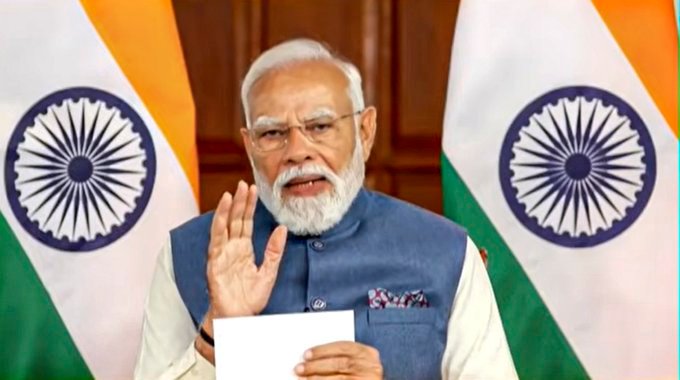
#WATCH | Prime Minister Narendra Modi says, “The inspiration and visionary work of Dr Syama Prasad Mookerjee, Pandit Deendayal Upadhyaya and Atal Bihari Vajpayee form a strong foundation for a developed India. Their statues today energise us, reminding us that every great… pic.twitter.com/74aHx6e7E7
— DD News (@DDNewslive) December 25, 2025
A key highlight of the memorial is the state-of-the-art lotus-shaped museum, spread over approximately 98,000 square feet and designed to reflect the Bharatiya Janata Party’s election symbol. Equipped with immersive digital installations, interactive displays, and advanced audio-visual technology, the museum narrates India’s national journey while showcasing the philosophical and political contributions of Vajpayee, Mookerjee, and Upadhyaya. Visitors are guided through exhibits featuring rare photographs, speeches, poems, archival footage, and nationalist quotations that underline the leaders’ vision for India.
READ: AMU Teacher Shot Dead on Campus; Manhunt for Gunmen
Addressing the gathering, Prime Minister Modi described December 25 as a day of profound historical importance, noting that it marks the birth anniversaries of both Atal Bihari Vajpayee and Mahamana Madan Mohan Malaviya. He hailed the two as “great luminaries” who safeguarded India’s identity, unity, and pride, and whose contributions continue to shape the nation’s democratic and cultural ethos. Modi also extended Christmas greetings, invoking the spirit of peace, goodwill, and harmony associated with the day.
In a veiled political critique, Modi said India’s progress should not be attributed to a single family, asserting that the BJP has worked to honour a wider spectrum of national contributors. He contrasted this approach with what he described as the Congress party’s past neglect of leaders outside the Gandhi family, while emphasising that the BJP has shown respect across political lines. He cited figures such as former President Pranab Mukherjee, former Prime Minister P.V. Narasimha Rao, Dr. B.R. Ambedkar, and Sardar Vallabhbhai Patel as leaders whose contributions have been duly recognised.
Located along the Gomti River embankment, the Rashtriya Prerna Sthal is now open to the public and is expected to become a prominent national landmark. Officials said the memorial aims to inspire future generations by highlighting principles of good governance, integrity, public service, and cultural rootedness—values closely associated with Vajpayee’s legacy.
The event drew large crowds, reflecting the enduring admiration for Atal Bihari Vajpayee and the continued relevance of the ideological foundations laid by Mookerjee and Upadhyaya in contemporary Indian politics.