The lynching of Hindu man and large-scale violence have heightened concerns over minority safety, press freedom and political stability, as Bangladesh struggles to contain escalating anti-India protests just weeks before polls.
BY PC Bureau
December 19, 2025: The Muhammad Yunus-led interim government in Bangladesh on Friday strongly condemned the lynching of a Hindu man accused of blasphemy, declaring that there was “no place for such violence in a New Bangladesh” and vowing strict action against those responsible. The killing took place amid a fresh wave of unrest triggered by the death of a radical student leader earlier this week.
The victim, Dipu Chandra Das, a garment factory worker and tenant in Dubalia Para of Bhaluka Upazila in Mymensingh district, was attacked around 9 pm on Thursday after local residents accused him of making derogatory remarks about Prophet Muhammad. Police said he was beaten to death by a mob.
“We deeply condemn the incident of beating and killing a Hindu man in Mymensingh. There is no place for this kind of violence in New Bangladesh. No one involved in this brutal crime will be spared,” the interim government said in an official statement.
READ: Singapore Police Undercuts Assam CM’s Murder Claim in Zubeen Garg Case
Urging citizens to remain vigilant, the Yunus administration warned against attempts to exploit the volatile situation, describing the violence as the handiwork of “isolated terrorist groups.” It said acts of arson, intimidation and destruction would not be tolerated, stressing that Bangladesh was undergoing a critical democratic transition that could not be derailed by chaos.
❗️Hindu Man LYNCHED During Overnight Protests In Bangladesh, Officials Confirm
“We wholeheartedly condemn lynching of a Hindu man in Mymensingh. There is no space for such violence in new Bangladesh. The perpetrators of this heinous crime will not be spared,” a govt statement… pic.twitter.com/egeKUg7uvd
— RT_India (@RT_India_news) December 19, 2025
“We unequivocally condemn all acts of violence, fear-mongering, arson and vandalism,” the statement said, adding that efforts to destabilise the country during this sensitive phase would be firmly resisted.
Chief Adviser Muhammad Yunus said Culture Adviser Mustafa Sarwar Faruquee had visited the site of the lynching as well as Chhayanaut Bhaban in Dhanmondi, which was attacked during the unrest. Speaking to the media, Yunus said perpetrators were being identified through CCTV footage and assured that they would be brought to justice. He also announced swift repairs to damaged cultural institutions with government support and the deployment of additional police and Border Guard Bangladesh (BGB) personnel to restore security.
In a detailed post on social media, Yunus described the violence as a conspiracy to derail democracy during a period of national mourning. “The process of identifying and prosecuting those responsible, based on CCTV evidence, is underway,” he said.
The lynching occurred against the backdrop of escalating violence following the death of Sharif Osman Hadi, a student leader and spokesperson of the radical group Inquilab Mancha. Hadi, a prominent figure in the July 2024 uprising that led to the fall of the previous government, was known for his strong anti-Sheikh Hasina and anti-India rhetoric. He died on Thursday from gunshot injuries sustained in an attack by unidentified assailants on December 12.
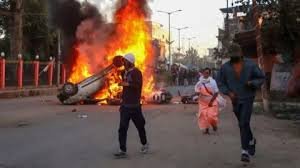
His death sparked widespread protests across Bangladesh, with thousands of supporters taking to the streets demanding justice. What began as demonstrations soon spiralled into large-scale unrest, marked by arson and targeted attacks on institutions perceived as aligned with the former administration or foreign interests.
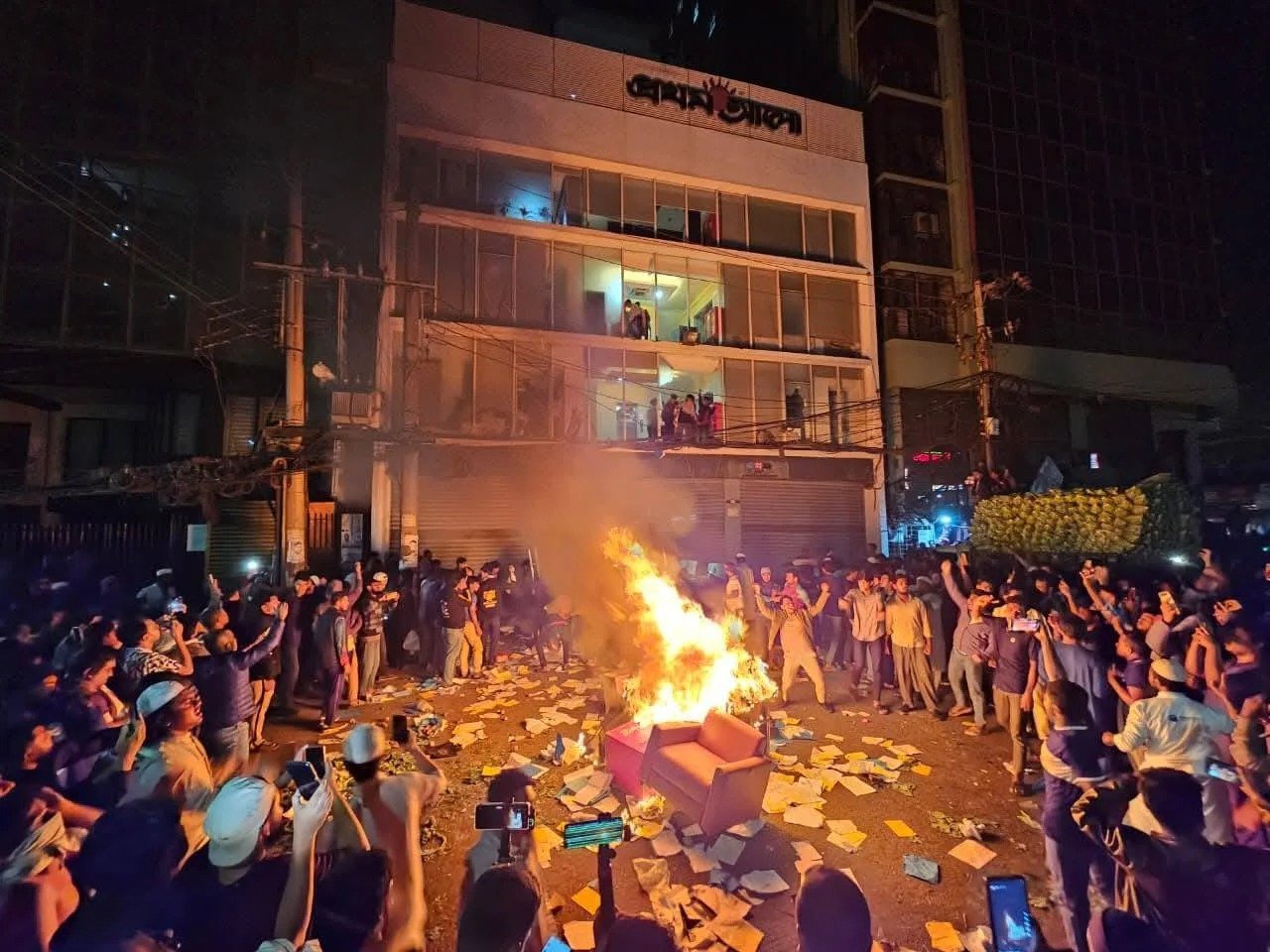
In Dhaka, mobs set fire to the offices of leading newspapers Prothom Alo and The Daily Star, trapping dozens of journalists inside. Protesters also vandalised cultural centres and targeted the residence of Sheikh Mujibur Rahman, the country’s founding father.
The interim government expressed solidarity with journalists from The Daily Star, Prothom Alo and New Age, whose offices and staff were attacked during the violence. “We stand with you and apologise for the terror and violence you have endured. An attack on journalists is an attack on truth, and we assure you full justice,” the statement said.
As Bangladesh heads toward general elections just two months away, the unrest has taken on a pronounced anti-India tone. Protesters have alleged that Hadi’s attackers fled to India and have called for the closure of the Indian High Commission in Dhaka, raising concerns over regional stability and press freedom amid an already fragile political transition.