The attack, which unfolded during the “Chanukah by the Sea” event, marks Australia’s deadliest shooting in nearly 30 years and has sparked nationwide mourning and international condemnation.
BY PC Bureau
December 15, 2025: Australian police have identified the two gunmen behind a mass shooting at Sydney’s iconic Bondi Beach during a Jewish festival as a father and son, in what has become the country’s deadliest shooting in nearly three decades.
One of the attackers, 50-year-old Sajid Akram, was shot dead by police at the scene. The second gunman, his 24-year-old son Naveed Akram, sustained gunshot wounds and is currently receiving treatment in hospital, New South Wales Police Commissioner Mal Lanyon confirmed on Monday.
Authorities said the pair were of Pakistani origin, according to reports citing US intelligence officials briefed on the investigation. Images circulating on social media show Sajid Akram’s New South Wales driver’s licence, in which he appears to be wearing a green shirt resembling a Pakistani cricket jersey.
Home Affairs Minister Tony Burke said Naveed Akram was born in Australia, while his father arrived in the country in 1998 on a student visa, later transitioning to a partner visa and subsequently holding resident return visas.
The second shooter has been identified as the 50-year-old father of Naveed Akram (the shooter who was identified earlier today). The father’s name is Sajid Akram and he was in Australia on a tourist visa. They are from Pakistan. The father had a license for 6 firearms, all of… pic.twitter.com/5w7vs39jrC
— Adam Milstein (@AdamMilstein) December 14, 2025
About the Attack
The shooting unfolded late Sunday afternoon as thousands gathered at Bondi Beach, including around 1,000 people attending “Chanukah by the Sea,” an event marking the beginning of the eight-day Hanukkah festival.
Witnesses said the attack lasted approximately 10 minutes, triggering panic as beachgoers fled across the sand and into nearby streets. Emergency services received the first reports of gunfire at around 6:45 pm.
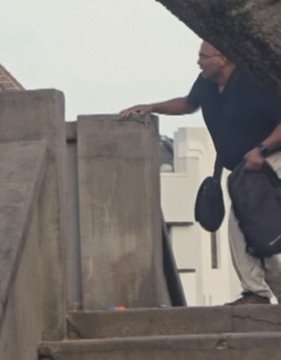
Video footage from the scene showed two men dressed in black firing long guns from a pedestrian footbridge leading to the beach. While police have not officially identified the weapons used, video evidence suggests a bolt-action rifle and a shotgun were involved.
One widely broadcast clip showed a bystander tackling and disarming one of the gunmen. The man was later identified as Ahmed al Ahmed, a local fruit shop owner, who was praised by New South Wales Premier Chris Minns as a “genuine hero.” A public fundraiser for him raised more than A$200,000 within hours.
Police said one of the attackers was known to security agencies, though Commissioner Lanyon stated there was no prior indication of an imminent or planned attack.
READ: Manipur Protesters Seek Safe Return of Displaced Families
Victims and Impact
At least 15 people were killed, ranging in age from 10 to 87, with 42 others injured, several critically.
The Orthodox Jewish group Chabad confirmed that one of the victims was Rabbi Eli Schlanger, assistant rabbi at Chabad of Bondi and an organiser of the event.
Mass shootings are extremely rare in Australia, which has some of the world’s strictest gun control laws. The last attack of comparable scale occurred in 1996, when 35 people were killed in Port Arthur, Tasmania.
National and International Condemnation
Prime Minister Anthony Albanese visited Bondi Beach on Monday, laying flowers at the site as mourners gathered with candles, flowers, and Australian and Israeli flags.
Calling the shooting a “dark moment for our nation,” Albanese described it as an antisemitic terrorist attack, pledging to eradicate antisemitism in Australia.
“This was an act of pure evil,” he said. “Today, all Australians stand with the Jewish community.”
World leaders, including US President Donald Trump, French President Emmanuel Macron, and Indian Prime Minister Narendra Modi, condemned the attack and expressed solidarity with Australia.
Authorities said they are confident only two attackers were involved, as investigations continue into the motive behind the violence.