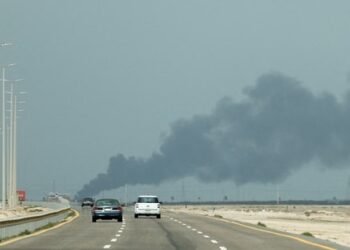
KOHUR has urged the NHRC to launch an immediate investigation into these incidents, stressing the need for accountability and justice for victims of violence and arson.
BY PC BUREAU
New Delhi, December 2 —
In a strongly worded multi-page submission to the National Human Rights Commission (NHRC), the Kuki Organization for Human Rights Trust (KOHUR) has alleged grave violations ranging from lynchings to the burning alive of a seven-year-old child, systemic medical collapse, and widespread police inaction. The four-page consolidated complaint, which the Trust describes as a unified representation, reproduces case-by-case accounts in dense narrative paragraphs and asserts that Manipur’s law-and-order framework has “completely failed.”
What stands out in the representation is not just the brutality of the events described but the large narrative passages documenting repeated police inaction. Several pages contain nearly identical formulations, establishing what the organisation calls a “verified pattern” of Zero FIRs without arrests.
The representation opens with a vivid, detailed account of a lynching. One entire paragraph is reproduced below exactly as it appears in the submitted document:
“Mrs. Gouzavung (57), a widow, and her son Goulalsang (30) were travelling from Kangchup Chingkhong towards Leimakhong when they were waylaid by a mob who had set up a roadblock. Their vehicle was stopped, and despite repeated pleas and despite the victims being unarmed civilians, both were dragged from their car by the mob. They were beaten with sticks and rods, and killed by a mob. The bodies were later recovered in a mutilated state.”
Immediately after narrating the killings in graphic detail, the representation inserts a critical line — a line that appears throughout the submission:
“A Zero FIR was filed — yet no arrests have been made.”
This sentence, which forms a core of the Trust’s allegations, is repeated in several sections and is presented as documentary evidence that police action remained “purely on paper.”
Ambulance Attack: A Burning That the Report Calls “One of the Most Horrific”
One of the largest and most disturbing paragraphs in the submission explains how a wounded child was burnt alive after an ambulance was stopped and attacked. The Trust reproduces this narrative in a long, uninterrupted block. The following is reproduced verbatim:
“Seven-year-old Tongsing Hangsing, his mother Meena, and aunt Lydia—who were already wounded by bullets—were being transported in an ambulance towards the hospital near Iroisemba. The ambulance was intercepted by a mob who demanded identification of the injured. Upon learning they were Kuki-Zo, the attackers forcibly removed the driver and attendants. The ambulance was set ablaze, and the boy was burnt alive. The mother and aunt also suffered fatal injuries from the fire and assault. Their charred remains were later identified by relatives. The attack occurred in broad daylight.”
This graphic description is followed by another identical sentence highlighting lack of police action:
“A CBI probe is ongoing, but no arrests have been made.”
The Trust stresses that even the involvement of central agencies has not resulted in progress, describing the case as “an emblem of absolute impunity.”
Collapse of Medical Infrastructure Described in Detail
Another long paragraph from the submission outlines what the organization describes as “preventable deaths” caused by collapsed health services. The Trust attributes this not to natural shortage but to targeted neglect and disruption of routes.
The report states:
“A civil hospital in Kangpokpi functions only as a PHC, and Pherzawl’s sub-centre acts as causing preventable deaths. Patients requiring emergency care must travel on unprotected routes where they face threats from armed groups. Several pregnant women, elderly patients, and injured individuals have died as a result of the inability to access functioning medical facilities. The road connecting hill districts to valley hospitals is no longer usable for Kuki-Zo civilians.”
According to the trust, these conditions amount to a “humanitarian emergency created by State inaction.”
Widespread Destruction and Property Losses Documented
The representation devotes long descriptive passages to the destruction of Kuki-Zo homes, churches, and shops. Photographic annexures (not reproduced here) accompany the text.
One full paragraph reads:
“Entire neighbourhoods in Imphal where Kuki-Zo families once lived are now either burned, looted, or occupied. Houses have been torched systematically. Churches are destroyed. Families have been unable to return to retrieve even basic belongings. Security forces have not provided protection to any abandoned Kuki-Zo property. Displaced families continue to live in relief camps with no clarity on return or compensation.”
Immediately after this paragraph, the Trust presents a major demand to NHRC:
“Direct the immediate protection of Kuki-Zo properties in Imphal and expedite compensation and rehabilitation… with disbursements beginning within 60 days.”
Challenging the Manipur Government’s ATRs
Another major block of text in the scanned pages focuses on rejecting the Manipur government’s Action Taken Reports (ATRs). It is not written in short bullet points but in a long, uninterrupted paragraph.
The complaint states:
“The ATRs submitted by the State government are evasive, incomplete, and insufficient. They do not mention the majority of cases brought before the Commission. They do not provide updates on investigation, arrest, or charge-sheeting. The ATRs ignore ground realities and fail to reflect the scale of violence. On these grounds, we request the NHRC to reject the ATRs. We request the Commission to issue a public censure within 15 days, acknowledging State failures documented in this submission.”
READ: Another BLO Dies by Suicide, Heartbreaking Video Surfaces
A Call for Judicial Inquiry
One of the final paragraphs in the representation makes a major demand — a judicial probe. The document again uses long-form prose:
“Given the scale, consistency, and nature of the violations described in these pages, we request the Commission to order a judicial inquiry within 30 days. The situation in Manipur warrants independent examination beyond the State police structure. Findings of the Supreme Court, the Gita Mittal Committee, and international observers all point to systemic failures requiring judicial scrutiny.”
Structural Final Demand: A Distinct Administrative Arrangement
The Trust links the events described across the four pages to a broader political demand:
“We appeal for a distinct administrative arrangement for Kuki-Zo areas to restore security, dignity, and self-governance. The current administrative set-up has failed to protect minority civilians. Travel between hill and valley districts remains impossible. Segregation is now complete. No long-term solution is possible without structural reform.”
A Pattern Highlighted Through Repetition
Perhaps the most striking rhetorical strategy is the Trust’s repeated inclusion of the same sentence across different sections:
“A Zero FIR was filed — yet no arrests have been made.”
This line appears multiple times, unchanged, forming a rhythmic structure in the document. The Trust appears to use repetition to demonstrate that the issue is not isolated but systemic.
Time-Bound Requests
A final long paragraph consolidates the four major prayers:
“We respectfully request the following: Reject the State ATRs and issue a public censure within 15 days; order an independent judicial inquiry within 30 days; direct immediate protection of Kuki-Zo properties in Imphal and expedite compensation and rehabilitation with disbursements beginning within 60 days; and ensure immediate arrest and prosecution of perpetrators in cases where Zero FIRs were filed. These interventions are essential to prevent further loss of life and restore dignity and security to affected civilians.”