KOHUR argues that national media coverage has dangerously sanitised a situation in which the Kuki-Zo minority suffered targeted attacks, widespread destruction, and institutional abandonment.
By: H S Benjamin Mate
November 30, 2025: It is my humble appeal to the conscience of India’s national media that the violence that erupted in Manipur on 3 May 2023 must no longer be portrayed as an “ethnic clash.” What unfolded was not a spontaneous communal conflict between two equal sides. It was — and remains — a humanitarian tragedy marked by deeply unequal suffering, silence, and state failure.
The facts that are often ignored are crucial.
The Meitei community constitutes more than 55 percent of the population of Manipur. The Kuki-Zo community comprises only around 16 percent. The power structure of the state — political, administrative, and institutional — remains overwhelmingly controlled by the dominant community. In any honest assessment, this is not a situation of two equally placed groups locked in conflict. It is a case of a minority population facing the machinery and protection of an overwhelmingly powerful majority.
Yet India’s national media continues to reduce this crisis to the convenient phrase — “ethnic violence”.
This framing is not only inaccurate. It is morally dangerous.
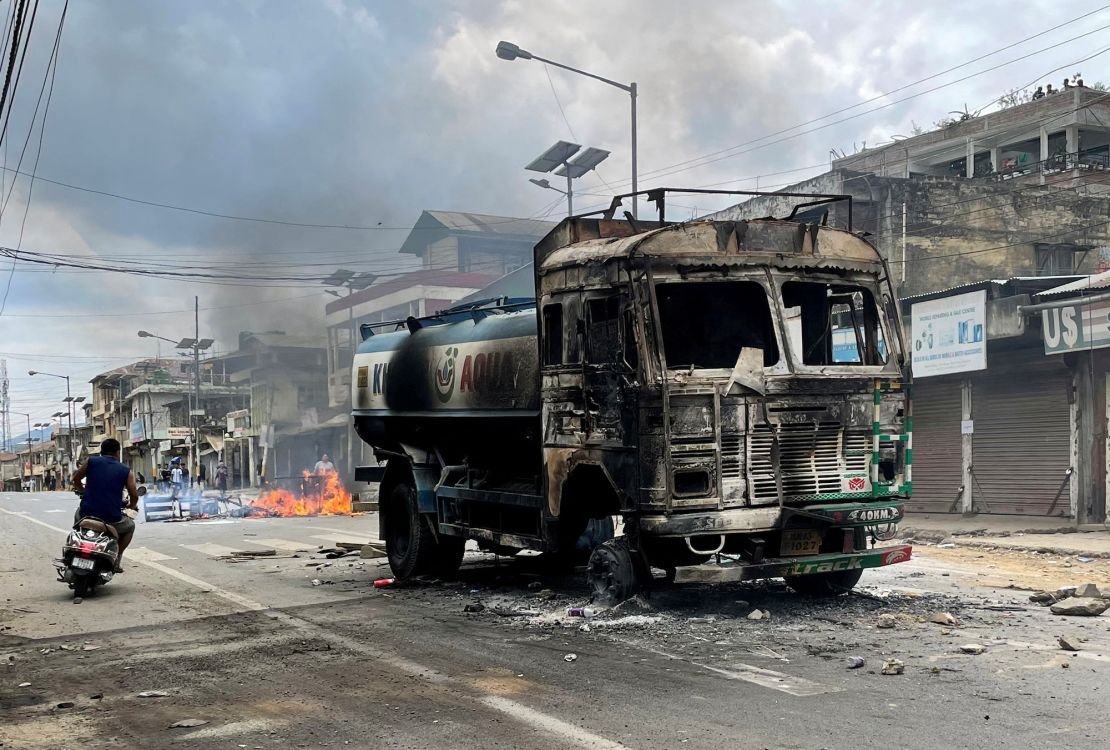
From the earliest days after 3 May, violence spread rapidly — but not symmetrically. Entire Kuki-Zo villages were burned, thousands were displaced overnight, families fled with nothing but their lives, and survivors spoke of unspeakable brutality, including sexual violence and targeted destruction of homes, churches, and settlements.
READ: Fresh FIR Names Sonia Gandhi, Rahul in National Herald Case
Even more alarming is that Imphal — the state capital — became a place of terror for Kuki-Zo civilians rather than a refuge. A capital is supposed to offer protection. Instead, it became a zone of fear.
When violence is described merely as “clashes,” an important truth disappears:
Clashes imply confrontation; what happened involved displacement, destruction, and helplessness.
Words matter. Headlines are not neutral. When national newsrooms hide behind “balanced reporting” without confronting power imbalance, they do not remain observers — they become participants in distortion.
Selective silence is not neutrality.
Equal airtime is not equal justice.
When stories of suffering are flattened and brutality is diluted into vague language, the victims’ pain becomes invisible. When survivors speak, media houses should amplify, not neutralize. When there are credible allegations of state failure and complicity, journalism must interrogate power — not sanitise it.
If a minority community is attacked, uprooted, and silenced while institutions of protection remain absent or compromised, then portraying the situation as simply “inter-ethnic tension” is dishonest.
When reporting avoids naming asymmetry, it assists denial.
When denial persists, injustice deepens.
This is not a call for hatred against any community. This is a call for truth over convenience.
A democratic society cannot survive on pretend neutrality.
Journalism cannot claim fairness while refusing moral clarity.
And the media cannot wash its hands of responsibility when misinformation costs lives.
What is needed now is not narrative management — it is accountability.
The people of the Kuki-Zo community do not seek sympathy.
They seek recognition, justice, and protection.
We demand:
- Independent judicial inquiry
- Transparent investigation into failures of protection
- Accountability for perpetrators and enablers
- Rehabilitation and restoration of displaced civilians
- Media ethics reviews of coverage patterns
- An end to narrative manipulation
If India’s media continues to misrepresent this crisis, history will not remember it kindly.
It will be judged not by what it reported —
but by what it chose to hide.
Truth delayed is justice denied.
And denial, repeated often, becomes cruelty.
This is not about ethnicity.
This is about human dignity.
And silence, in the face of injustice, is never neutral.
(The Author is Chairman of the Kuki Organisation for Human Rights Trust)